San Francisco HAIR GUIDE
Your Guide to Getting Curtain Bangs in San Francisco
Key decisions for your consultation, from parting and cowlicks to the final shape.
Every image you see is a bookable style. Click any photo to view details and book an appointment with a stylist.

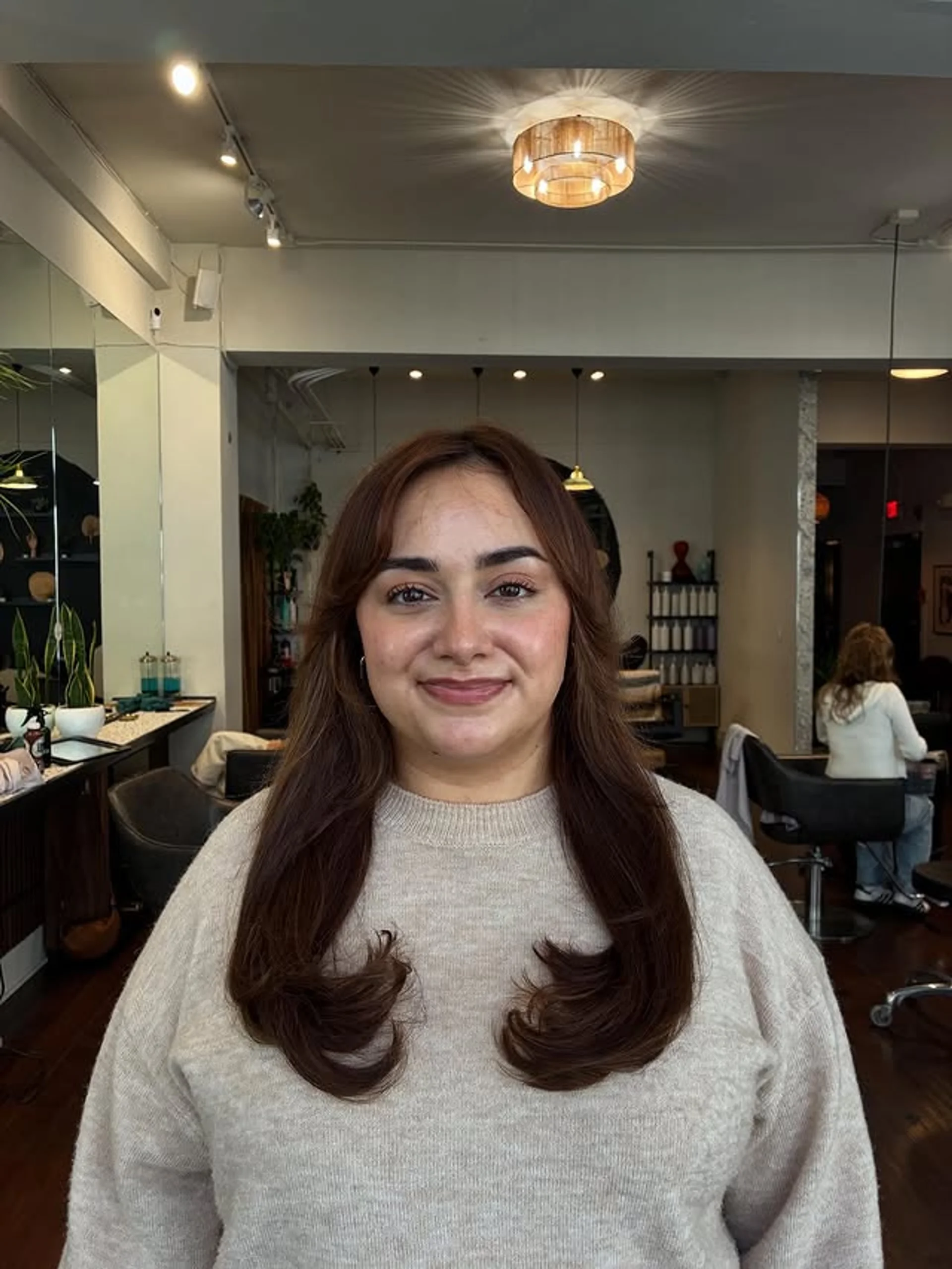
Curtain bangs are more than just a fringe—they’re a custom frame for your face. The key to a successful cut is tailoring it to your natural part, hairline, and styling routine. The main tradeoff is maintenance; while they look effortless, they often require daily styling and regular trims. This guide uses examples from San Francisco salons to help you discuss the details that matter with your stylist, like where the bangs should start, how long they should be when dry, and how they’ll connect with the rest of your hair.
Find Your Parting: Working With or Against Cowlicks
The starting point for your bangs is your natural part. A strong cowlick can force hair in one direction, making a perfectly centered part a daily styling challenge. Discussing this with your stylist is crucial for a fringe that falls correctly.
Whether you prefer a distinct center part or a softer, more flexible look, your stylist can adjust the cut. Some bangs are cut to be styled from a sharp middle part, creating a symmetrical frame. Others are cut with more versatility to accommodate an off-center part or to work around a stubborn cowlick at the hairline. Showing your stylist how your hair falls naturally is the best way to plan the cut.


💬What to Ask Your Stylist
- My hair naturally parts here. Can we cut the bangs to work with this part?
- I have a cowlick on this side. How will that affect how the bangs fall?
- Can these bangs be styled with both a center and a side part?
Best For:
- • Understanding your natural hair growth patterns
- • Low-maintenance styling
- • A fringe that complements your hairline
NYC Price Range:
Ask the salon for a current quote
Maintenance:
Styling is often needed to direct the bangs, especially if you're training them to go against a natural part. A blow-dryer and round brush can help. Ask your stylist for a personalized maintenance plan.
Decide on Length: From Cheekbone to Jawline
The length of your curtain bangs determines where they draw attention and how they can be styled. Shorter bangs highlight the eyes and cheekbones, while longer versions offer more versatility, easily tucking behind the ears or blending into updos.
Your stylist will cut your bangs dry to see exactly how they’ll lay. A shorter, cheekbone-length fringe creates a bolder, more classic 'curtain' look. Longer bangs, hitting around the jawline, offer a softer, face-framing effect that can feel more like a long layer. Consider your daily habits—if you frequently tie your hair back, longer bangs might be more practical.


💬What to Ask Your Stylist
- What length would you recommend to highlight my cheekbones?
- Can we cut them long enough so I can still pull all my hair back?
- How much will they shrink up when styled with a round brush?
Best For:
- • Highlighting specific facial features
- • Versatile styling options
- • Matching the fringe to your overall hair length
NYC Price Range:
Ask the salon for a current quote
Maintenance:
Shorter bangs will require more frequent trims (typically every 4-6 weeks) to keep them at the desired length. Longer bangs are more forgiving as they grow out.
Create a Connection: Blending Bangs with Face-Framing Layers
Curtain bangs look most seamless when they connect fluidly with the rest of your haircut. How they blend into your side layers affects the overall shape and movement of your style.
A well-blended fringe avoids a harsh, disconnected look. In shag or wolf cuts, the bangs are often just the shortest point of a series of cascading layers. In longer, less-layered styles, a stylist might create softer, face-framing pieces that create a gentle transition from the shorter bangs to the full length of your hair. This connection is key to achieving a soft, grown-in appearance.


💬What to Ask Your Stylist
- How will the bangs connect with my existing layers?
- Can you add some face-framing layers to help blend the bangs?
- Will this look disconnected if I wear my hair straight?
Best For:
- • A seamless, natural-looking haircut
- • Softening the overall style
- • Growing out bangs gracefully
NYC Price Range:
Ask the salon for a current quote
Maintenance:
A blended cut tends to grow out more gracefully than a disconnected fringe. You may still need bang trims, but the overall shape will hold longer. Ask your stylist how to style the connecting layers.
Consultation tips
Arrive with your hair styled normally
Let the stylist see your hair on a typical day. This helps them assess your natural part, texture, and any cowlicks they'll need to work with to create the perfect fringe.
Talk about your styling routine
Be honest about how much time you're willing to spend on your hair. This will help your stylist decide on a length and shape that fits your lifestyle, not just the inspiration photo.
Use your hands to show length
Instead of saying 'not too short,' use your fingers to point to the exact spot on your face where you'd like the shortest part of the bangs to fall. This avoids any miscommunication.
Before you book
Compare relevant portfolio photos
Choose references with a similar hair texture and hairline to yours. Explain what you like about the bangs—the length, the softness, or how they blend into the sides.
Book a consultation or a full haircut
Some salons offer bang trims, but for a new set of curtain bangs, book a full haircut appointment. This ensures the stylist has enough time to cut the fringe and blend it properly with the rest of your hair.
Compare portfolio photos and discuss your goals with a stylist.