San Francisco HAIR GUIDE
How to Find the Best Pixie Cut Stylist in San Francisco
A pixie is a commitment to a specific shape, not just short hair. Finding the right stylist means looking for portfolios that show mastery of the details that matter most: the fringe, crown, and nape.
Every image you see is a bookable style. Click any photo to view details and book an appointment with a stylist.
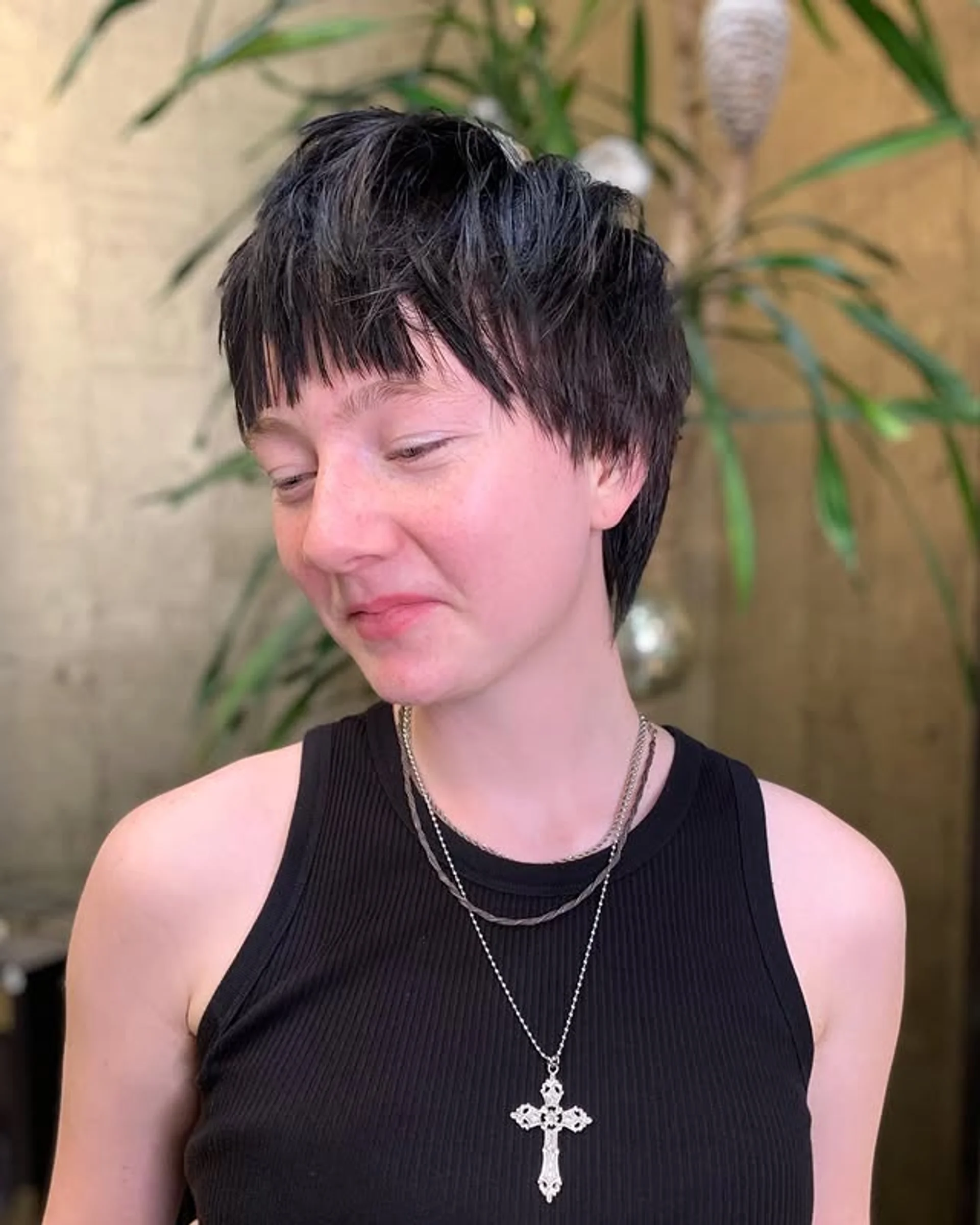

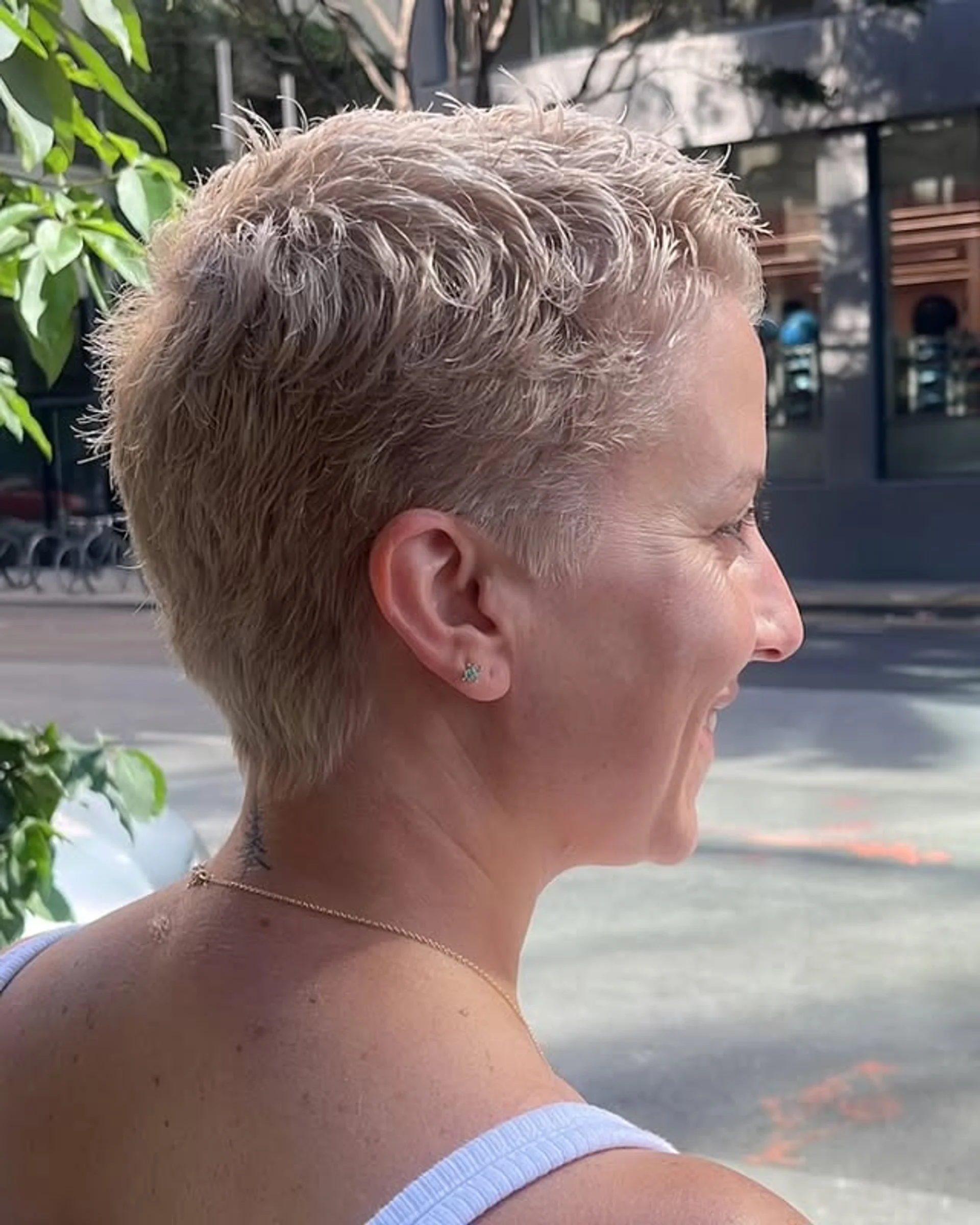
Finding a stylist who excels at pixie cuts in San Francisco involves looking past the length and focusing on their skill in shaping. A great pixie isn't just a short haircut; it's a tailored style that balances texture, manages the hairline, and is cut to grow out gracefully. The primary tradeoff is maintenance: most pixies require trims every 4-6 weeks to keep their shape.
Evaluate the Fringe and Face-Framing
The fringe, or bangs, sets the tone for a pixie cut. It can be bold and short, soft and sweeping, or textured and piecey. When reviewing a stylist’s portfolio, look for a variety of fringe styles that show their range and precision.
Notice how different fringe lengths and textures can create entirely different effects. Micro bangs create a bold, graphic look, while longer, choppy bangs offer more styling versatility and softness. A side-swept fringe can balance features, and longer pieces can be styled for a more tousled effect. A stylist who showcases these variations understands how to customize a pixie for different face shapes and preferences.


💬What to Ask Your Stylist
- Based on my hair texture and hairline, which type of fringe would be easiest for me to style each day?
- How will this fringe style grow out, and what will the maintenance be like between full cuts?
Best For:
- • Defining the overall style (edgy, soft, or classic)
- • Balancing facial features
- • Customizing the cut to your hairline
NYC Price Range:
Ask the salon for a current quote
Maintenance:
Shorter, blunter bangs require more frequent trims than longer, softer styles. Ask your stylist for a personalized maintenance plan.
Assess Crown Volume and Texture
The crown is where a pixie cut gets its shape and movement. A well-executed cut will work with your hair’s natural texture—be it curly, wavy, or straight—to create volume or sleekness without demanding excessive daily styling.
Look for portfolio examples on hair that resembles your own. See how the stylist handles curls, creating shape without frizz, as in a curly pixie crop. For wavier hair, look for cuts that enhance movement with piecey layers. For straight hair, see if the stylist creates texture and volume through choppy layers to prevent the cut from looking flat. This demonstrates their ability to build a shape that lasts beyond the salon chair.


💬What to Ask Your Stylist
- How would you approach layering at the crown to work with my hair's density and natural texture?
- What styling products and techniques would you recommend for maintaining this texture at home?
Best For:
- • Working with natural curls and waves
- • Adding volume to fine or straight hair
- • Creating a wash-and-go friendly style
NYC Price Range:
Ask the salon for a current quote
Maintenance:
Textured styles can be more forgiving as they grow out, but may require specific products like paste or pomade to define layers. Discuss the expected daily styling routine with your stylist.
Consider the Profile and Nape
The silhouette of a pixie is defined by how it’s shaped around the ears and at the nape of the neck. This detail determines whether the cut looks sharp and clean or soft and textured, and it has a major impact on how the style grows out.
Examine profile shots in a stylist’s portfolio. A clean, tapered nape creates a classic, sharp look but will require frequent touch-ups as it grows. A softer, more textured finish can be more forgiving and offers a different aesthetic. Some modern pixies even leave more length at the nape for a shaggier effect. A stylist who shows control over different nape styles can tailor the cut's foundation to your liking.


💬What to Ask Your Stylist
- Should we go for a clean, tapered nape or a softer, more textured look?
- How will the hairline at my neck affect the grow-out process for this shape?
Best For:
- • Ensuring a flattering silhouette from all angles
- • Managing the grow-out process
- • Customizing the finish to be sharp or soft
NYC Price Range:
Ask the salon for a current quote
Maintenance:
Tapered or faded napes show regrowth the fastest and often require clean-up appointments between full haircuts. Softer, longer napes offer a more seamless grow-out.
Consultation tips
Discuss your grow-out plan from day one.
A great pixie is cut with its evolution in mind. Ask the stylist what the next 2-3 months will look like. They can plan for a shape that transitions well into a short bob or a longer style, and advise you on when to come in for maintenance trims versus reshaping appointments.
Talk about your lifestyle and styling habits.
Be honest about how much time you're willing to spend on your hair. If you need a true wash-and-go cut, the stylist can tailor the texture and shape for that. If you enjoy styling, they might suggest a cut with more length and versatility.
Before you book
Collect photos of what you like and dislike.
Bringing reference photos is essential, but showing what you *don't* want can be even more helpful. A picture of a pixie you find too harsh, too round, or too flat helps the stylist understand your preferences and avoid misinterpretations.
Analyze portfolios for hair similar to yours.
Pay special attention to pixie cuts on clients with a similar hair texture (curly, fine, thick, wavy) to your own. This is the best indicator of how a stylist's technique will translate to your hair.
Compare portfolio photos and discuss your goals with a stylist.