HAIRCUT GUIDE
How to Choose a Fringe When You Have a Cowlick
Discover how different fringe styles can work with your natural growth patterns instead of fighting them.
Every image you see is a bookable style. Click any photo to view details and book an appointment with a stylist.
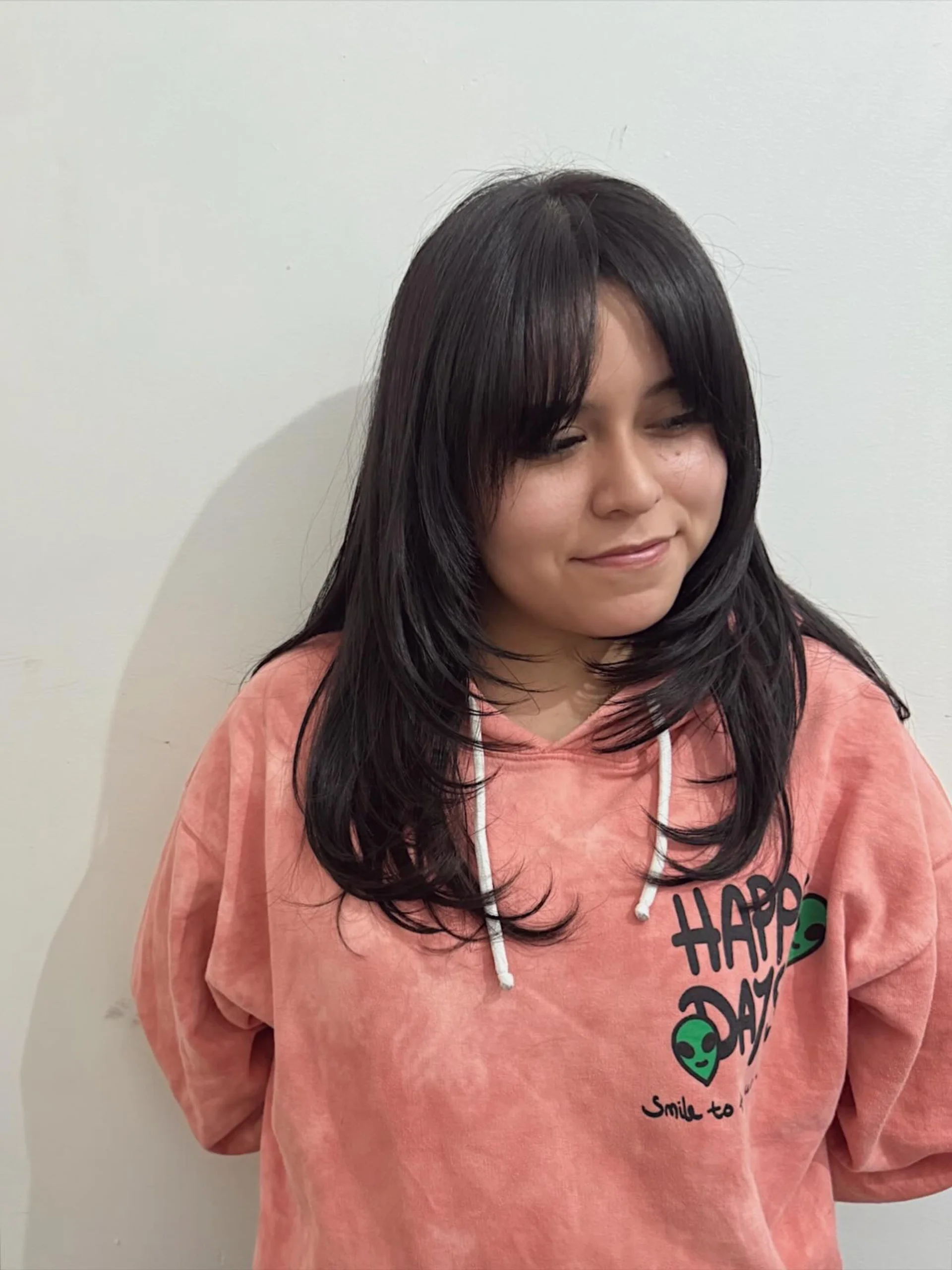
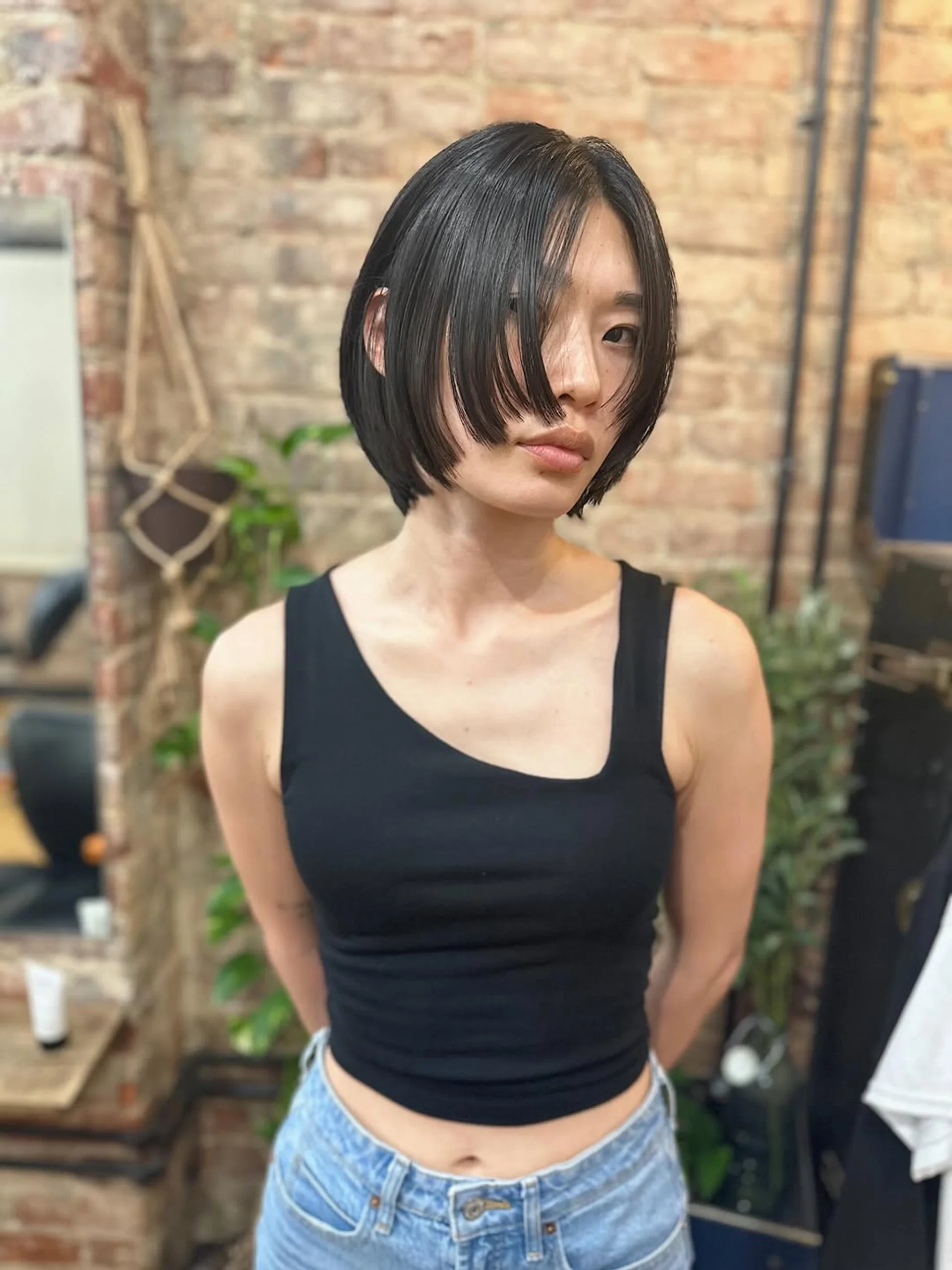
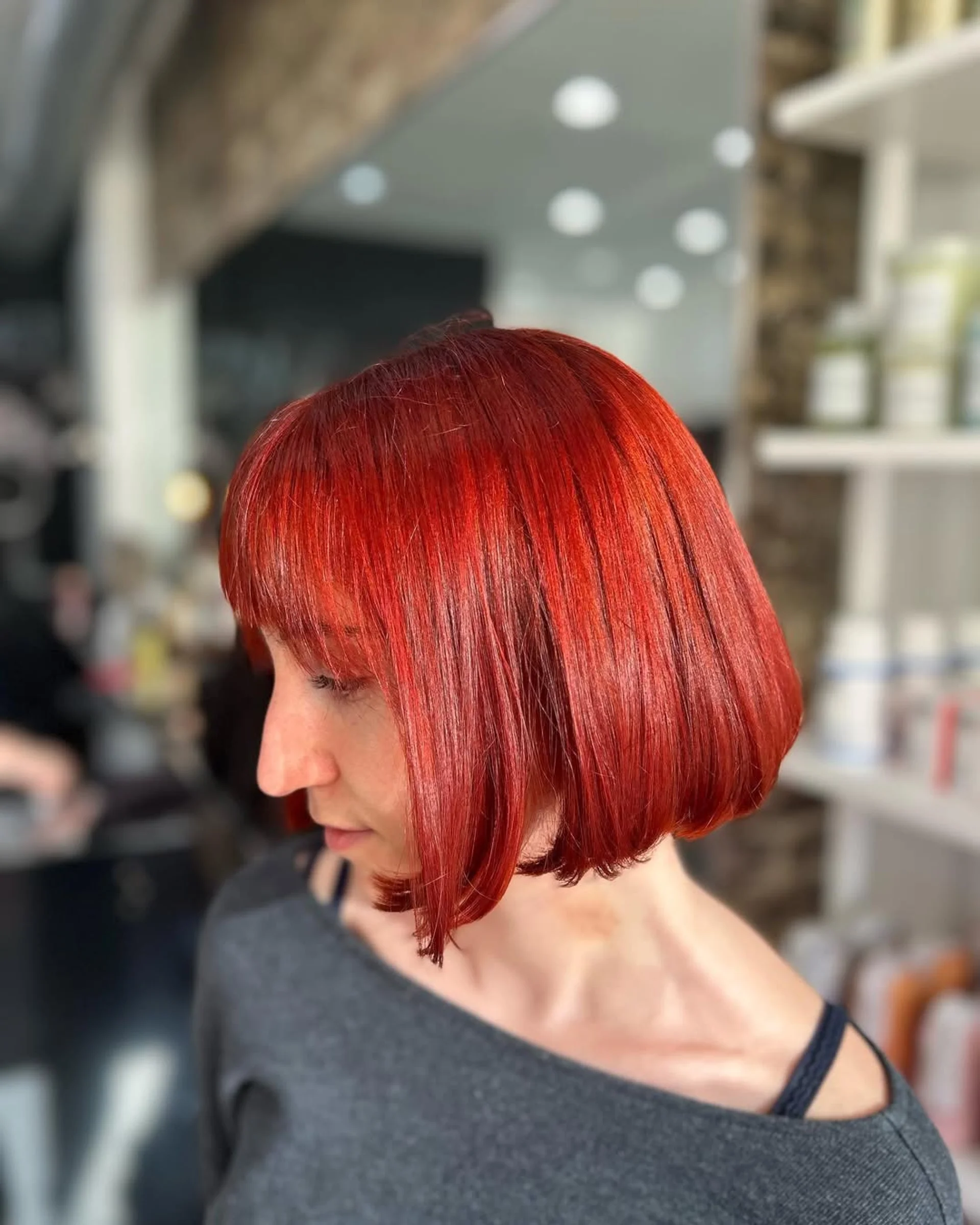
Deciding to get a fringe when you have a prominent cowlick comes down to a simple truth: no haircut will remove a natural growth pattern. However, the right haircut can absolutely change how that growth pattern behaves. A cowlick is simply a section of hair that grows in a strong, swirling direction, often pushing the hair up or forcing it to split. Instead of fighting it with a style that requires constant heat and styling products to lay flat, you can choose a fringe designed to use weight, texture, or natural parting to your advantage. Finding the right balance requires evaluating how much daily styling you are willing to commit to and selecting a shape that accommodates your natural root direction.
Using Weight to Your Advantage
A heavier, denser section of hair
One way to handle a front cowlick is to physically weigh it down. A full fringe takes hair from further back on the crown, creating a thicker, denser section over the forehead. This added weight can help suppress the natural lift of a cowlick, making it easier to blow-dry the hair forward. While it provides a bold, defined shape, it may require more time with a brush and blow-dryer to train the roots each morning.


Consultation tips
Arrive with un-styled hair.
If you blow-dry your hair flat before your appointment, your stylist might not see the true strength or direction of your cowlick.
Point out the exact location.
Show the stylist where your hair naturally splits or sticks up so they can factor that specific spot into where they place layers or weight.
Before you book
Evaluate your morning routine
Be honest about whether you are willing to spend 5 to 10 minutes wetting and blow-drying your fringe every single morning. If not, lean toward textured or curtain styles.
Compare relevant portfolio photos
Look for references that match your natural hair texture. A heavily styled inspiration photo might not behave the same way on a strong, natural cowlick without significant effort.
Compare portfolio photos and discuss your goals with a stylist.


