NYC Men's Scissor Cuts: Finding a Softer Side and Neckline
Use local portfolios to compare softer tapers and natural necklines, and learn what to ask for in a consultation.
Every image you see is a bookable style. Click any photo to view details and book an appointment with a stylist.
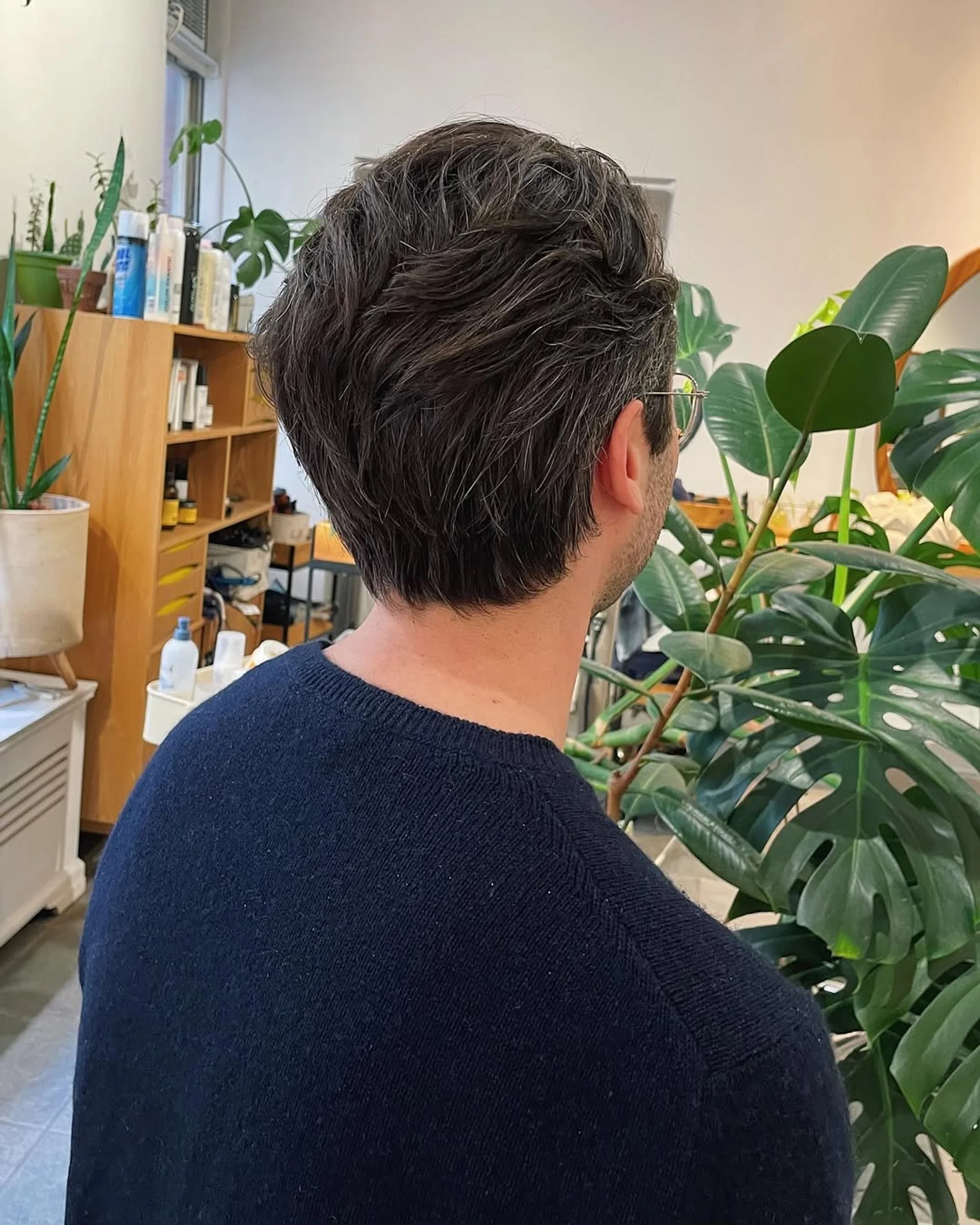
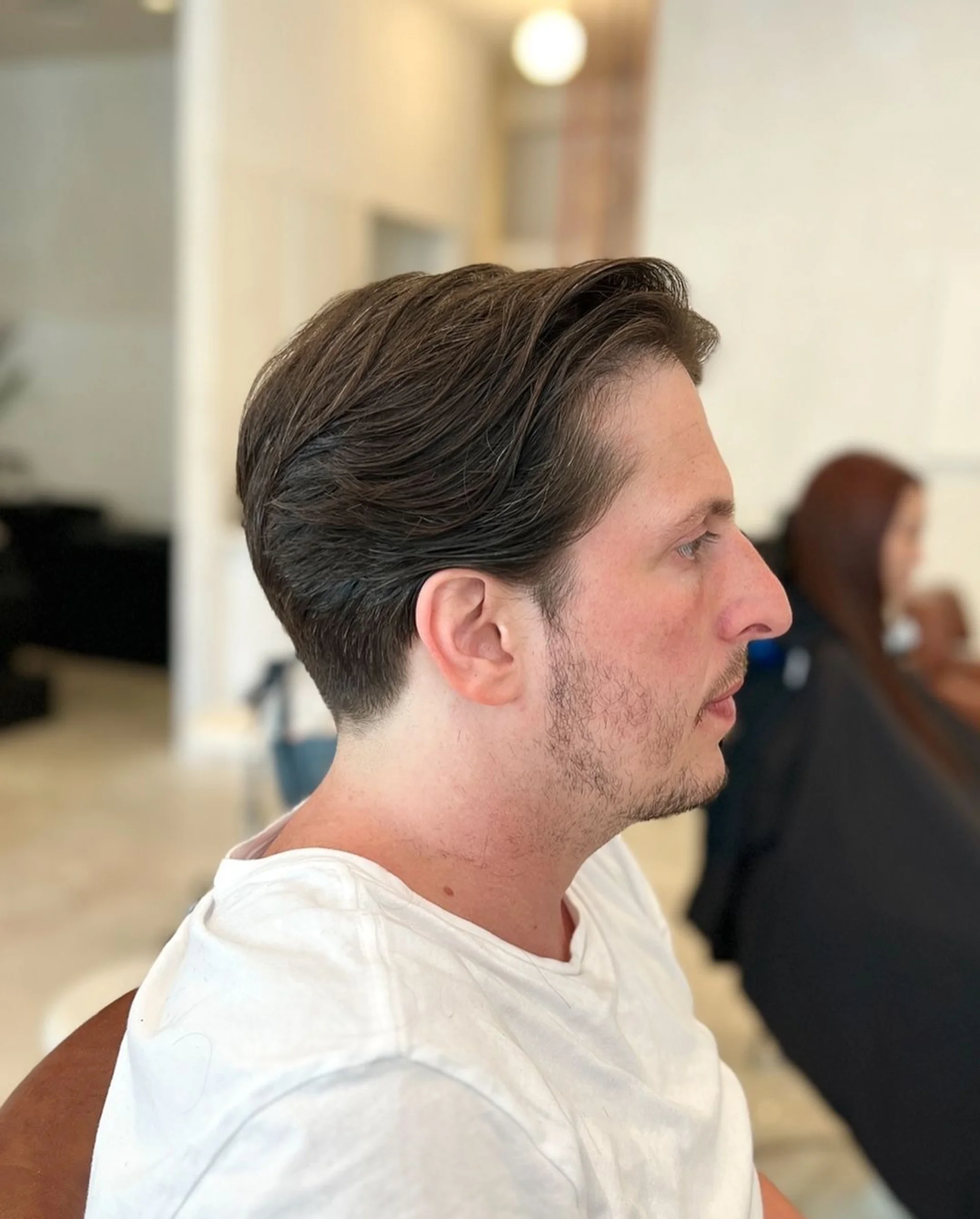

To get a softer haircut that avoids the sharp contrast of a high-and-tight clipper fade, the key is to ask for a scissor cut with a taper instead of a fade. This approach leaves more length on the sides and back, creating a more blended, textured look. The main tradeoff is maintenance: while scissor cuts grow out more gracefully than a skin fade, they may require slightly more frequent trims to maintain their tailored shape.
The Soft Taper
A gradual blend that leaves more length than a fade.
A taper gradually shortens the hair down the sides and back of the head, but it doesn't usually go down to the skin like a fade. It’s often done with scissors over a comb, which gives the stylist more control over the final texture and length. This technique creates a clean, classic shape that complements many styles, from polished side parts to more casual textured crops.


💬What to Ask Your Stylist
- Could you use scissors instead of clippers for the sides?
- I'd like a soft taper that leaves some length around the ears. Is that possible with my hair texture?
- How short will the taper be at the bottom?
Best For:
- • A professional or classic look
- • Growing out a shorter fade
- • Hair that is straight or wavy
NYC Price Range:
Ask the salon for a current quote
Maintenance:
A soft taper grows out more naturally than a sharp fade. Plan for a trim every 3-5 weeks to keep the lines clean.
Layered and Textured Sides
Keeping length while removing bulk for shape and movement.
If you want to maintain significant length on the sides, ask for layers instead of a taper. Layering removes weight and adds texture, preventing the hair from looking bulky or unkempt. This is a great option for wavy or curly hair, as it enhances natural movement. It creates a softer overall silhouette that connects the top of your hair to the sides more seamlessly.


💬What to Ask Your Stylist
- Can we keep the length on the sides but add layers to remove some weight?
- I'd like a softer look that doesn't feel like a 'barber' cut. Can you use layers to create more texture?
- How would you suggest layering the sides to work with my natural wave?
Best For:
- • Wavy and curly hair textures
- • Softer, more relaxed styles
- • Creating volume and movement
NYC Price Range:
Ask the salon for a current quote
Maintenance:
Longer, layered cuts can go longer between appointments. Expect to need a trim every 4-7 weeks to reshape the layers and prevent split ends.
Natural and Tapered Necklines
Choosing a finish that grows out gracefully.
The neckline is a crucial detail for a softer cut. A 'blocked' or 'squared-off' neckline creates a hard, artificial line that can look untidy after only a week of growth. In contrast, a 'tapered' or 'natural' neckline follows your hairline, fading gradually. This finish looks more organic and grows out much more cleanly, extending the life of your haircut.


💬What to Ask Your Stylist
- Could you taper the neckline instead of blocking it?
- I'd like a neckline that grows out softly. What do you recommend?
- Can you show me in the mirror how you plan to finish the neckline?
Best For:
- • Longer intervals between haircuts
- • A more natural, less severe finish
- • Almost all hair types and styles
NYC Price Range:
Ask the salon for a current quote
Maintenance:
A tapered neckline is the lowest-maintenance option. While the rest of the cut may need a trim, the neckline will not develop a hard grow-out line.
Consultation Tips for a Softer Cut
Use the term 'scissor-over-comb'.
This technique allows for a softer, more textured finish than clippers and clearly communicates that you want to avoid a buzzed look.
Talk about your daily routine.
Let your stylist know how much time you're willing to spend on styling. A scissor cut with more length may require a light pomade or cream to look polished, unlike a very short clipper cut.
Bring multiple reference photos.
Show photos of what you like, but also what you want to avoid. Saying "I like the texture here, but I want to avoid this hard line" gives your stylist precise direction.
Before You Book
Analyze portfolio examples
Look for stylists whose portfolios feature the kind of soft, textured, or tapered cuts you're interested in. This is a better indicator of their expertise than a general salon description.
Consider your hair's texture and density
A scissor cut works differently on fine, straight hair versus thick, curly hair. Find reference photos with a hair type similar to your own for a more realistic idea of the final result.
Compare portfolio photos and discuss your goals with a stylist.