San Francisco HAIR GUIDE
Men's Haircuts for Thick, Straight Hair in San Francisco
A guide to managing side growth, top weight, and outlines with fades, tapers, and textured cuts.
Every image you see is a bookable style. Click any photo to view details and book an appointment with a stylist.

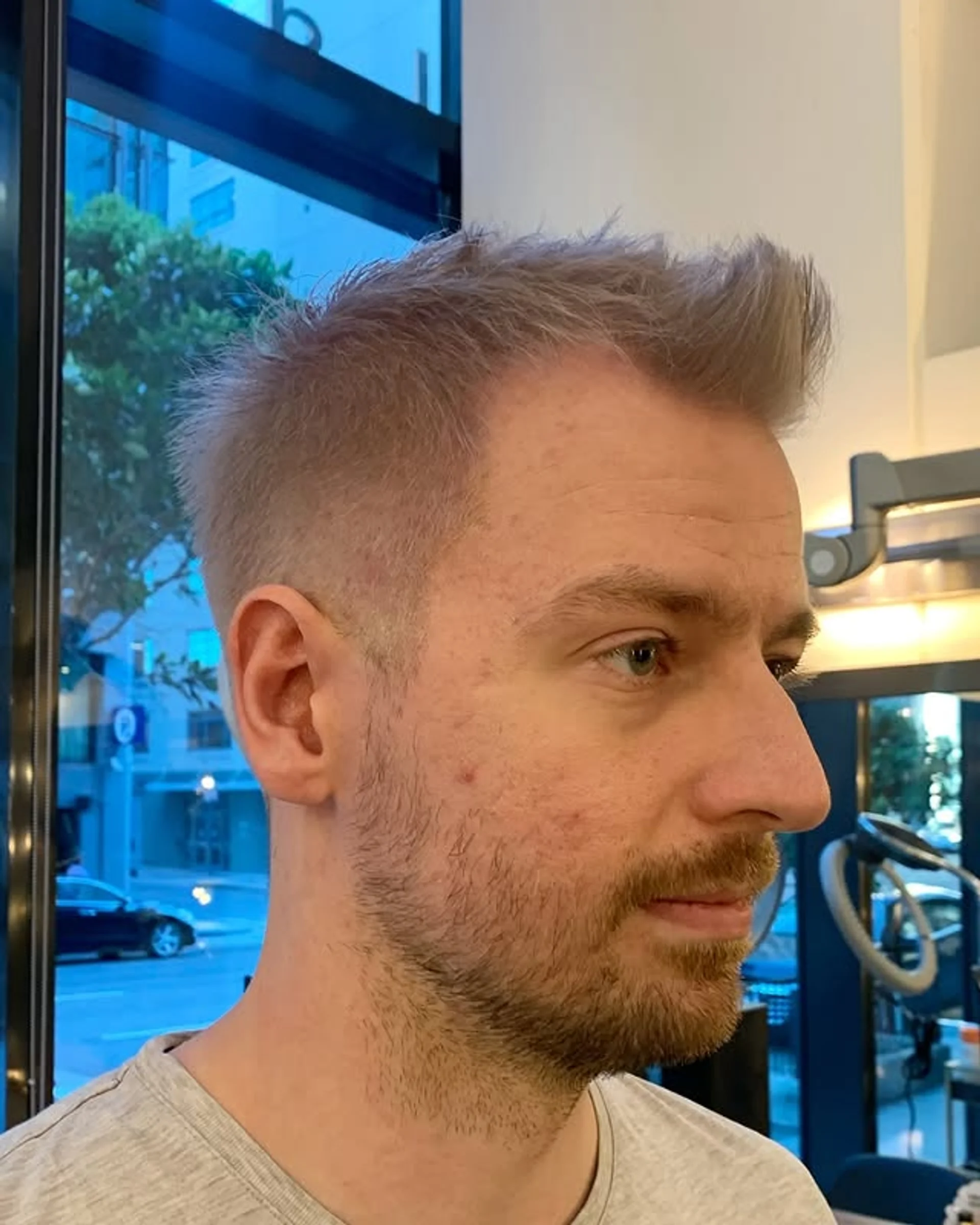

Thick, straight hair presents a unique challenge: without the right cut, it can quickly grow out into a bulky, triangular shape. The key is to choose a structure that removes weight where you don't want it and uses it to your advantage elsewhere. This guide compares options for managing the sides, top, and outline of your haircut, using examples from San Francisco stylists to help you find a look that suits your maintenance routine and style.
Control Side Growth: Fades vs. Tapers
The primary difference is how sharply the hair transitions from short to long. This choice dictates the maintenance schedule and overall look.
A fade cuts the hair down to the skin, creating a high-contrast, sharp look that blends upwards. It keeps the sides looking clean for longer but the grow-out is more noticeable. A taper follows the natural hairline, leaving more length at the sides and back for a softer, more traditional finish. Tapers tend to grow out more gracefully but may not feel as sharp.


💬What to Ask Your Stylist
- How high should the fade or taper start to complement my head shape?
- Which option will be easier to maintain between appointments, given how my hair grows?
- Can we do a drop fade that follows the curve of my ear, or should we stick to a classic taper?
Best For:
- • Fades for a sharp, modern look that requires frequent touch-ups.
- • Tapers for a versatile, classic shape with a more forgiving grow-out period.
NYC Price Range:
Ask the salon for a current quote
Maintenance:
Fades often require more frequent visits to maintain the sharp transition, while tapers can look good for longer as they grow out. Discuss your ideal appointment frequency with your stylist.
Manage Top Weight: Textured Crop vs. Mid-Length Flow
Decide whether to remove bulk with texturizing techniques for a shorter style, or keep the length and use the weight to create flow and direction.
A textured crop is a short, versatile cut where the stylist removes weight from the top, allowing for easy, messy styling that won't look puffy. It's a low-maintenance option for controlling thick hair. Alternatively, growing the top out to a medium length allows the natural weight of the hair to help it lay flat or flow back. This can require more styling product and direction to look intentional.


💬What to Ask Your Stylist
- How much texturizing is needed to keep my hair from looking too bulky on top?
- If I grow the top out, what products should I use to control it and give it shape?
- Which length on top would work best with my hairline and face shape?
Best For:
- • Textured crops for a low-fuss, modern style that actively manages bulk.
- • Mid-length flow for those who prefer more styling options and a classic look.
NYC Price Range:
Ask the salon for a current quote
Maintenance:
A textured crop needs regular trims to maintain its shape and prevent it from becoming round. A mid-length style can go longer between cuts, but requires more daily styling effort with pomades or creams to avoid looking unkempt.
Soften the Outline: Textured Edges vs. Sharp Lines
The finish of the hairline, fringe, and nape can either create a sharp, defined frame or a softer, more lived-in appearance.
A sharp outline, often created with clippers or a straight razor, gives a haircut a very clean, deliberate, and fresh look. This is common with fades and classic barbering. A softer, textured outline uses scissors or a razor to create a more natural edge that grows out less obviously. This approach works well for shaggier styles, crops with a fringe, or anyone wanting a lower-maintenance neckline.


💬What to Ask Your Stylist
- Should my neckline be tapered, blocked, or rounded?
- Would a soft, textured fringe help balance my features, or should we keep the hairline clean?
- How will a sharp line-up look as it grows out over the next two weeks?
Best For:
- • Sharp lines for a polished, high-definition style.
- • Textured edges for a relaxed, modern look that is more forgiving during grow-out.
NYC Price Range:
Ask the salon for a current quote
Maintenance:
Sharp hairlines and blocked napes show regrowth quickly and may require clean-ups between full haircuts to stay looking crisp. Soft, tapered, or textured outlines blend in with new growth, extending the life of the cut.
Consultation tips
Describe your styling routine (or lack thereof).
Tell your stylist if you're a wash-and-go person or if you use a blow dryer and products daily. This helps them tailor the cut's texturizing and length to a style you can realistically replicate at home.
Bring photos of what you *don't* want.
It's just as helpful to show a stylist the hard lines, puffy shapes, or specific styles you want to avoid. This sets clear boundaries and helps them understand your preferences for managing your hair's thickness.
Talk about your cowlicks and growth patterns.
Thick, straight hair can have strong growth patterns, especially at the crown and hairline. Point these out to your stylist so they can cut in a way that works with, rather than against, your hair's natural tendencies.
Before you book
Compare relevant portfolio photos
Look for reference photos where the person has a similar hair density. Use these examples to discuss what you like about the sideburns, the shape of the top, and the finish of the neckline.
Consider your maintenance tolerance
Be realistic about how often you plan to visit the salon. A sharp skin fade will require more frequent appointments to look its best than a softer taper with a textured top.
Book a consultation
The best way to decide is to talk with a professional. They can assess your hair's specific texture and density and recommend a cut that will achieve your goals and grow out well.
Compare portfolio photos and discuss your goals with a stylist.