How to Find a Men's Scissor-Cut Stylist in San Francisco
Use local portfolios to find stylists who specialize in softer sides and natural necklines, and learn what to ask for in your consultation.
Every image you see is a bookable style. Click any photo to view details and book an appointment with a stylist.
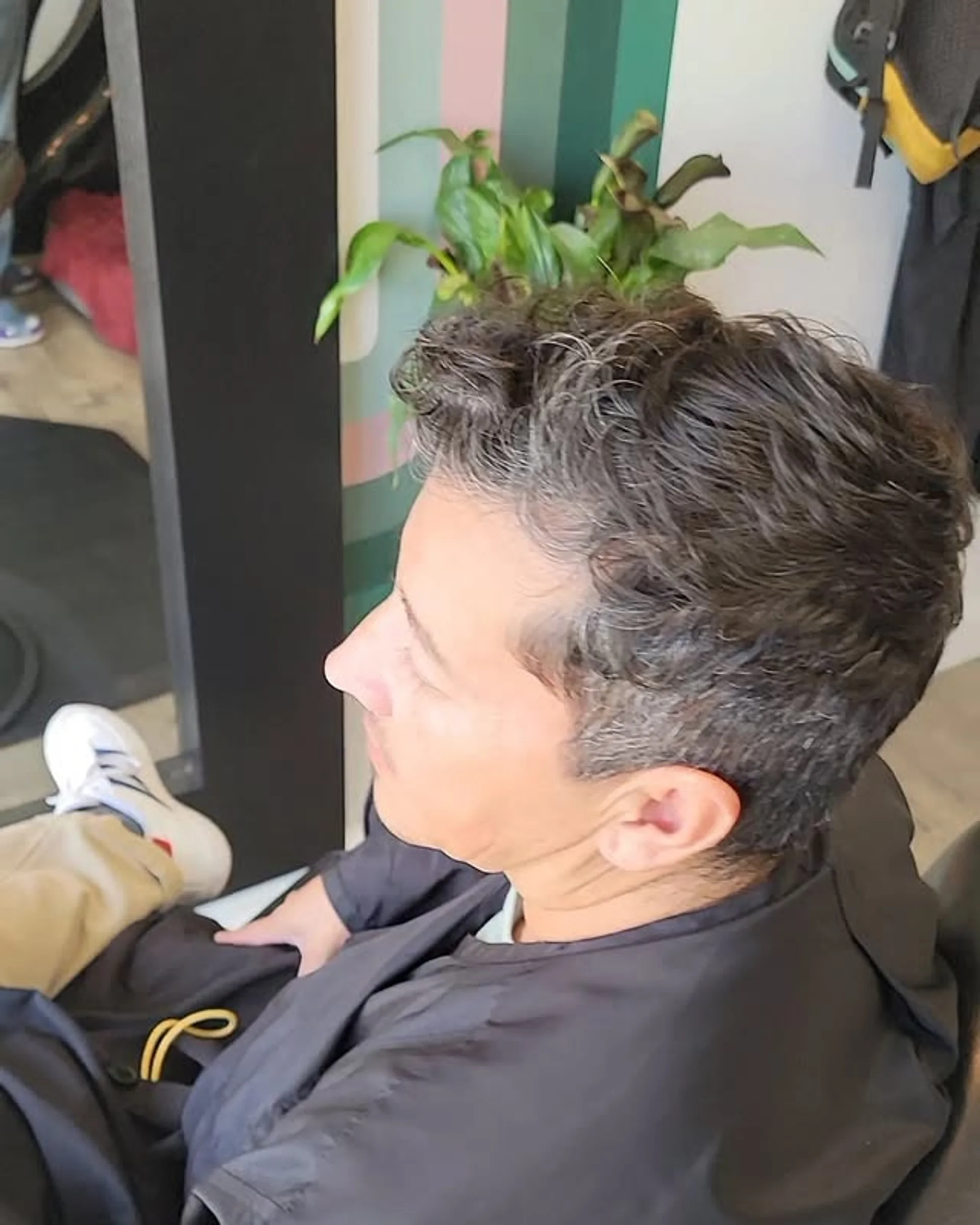

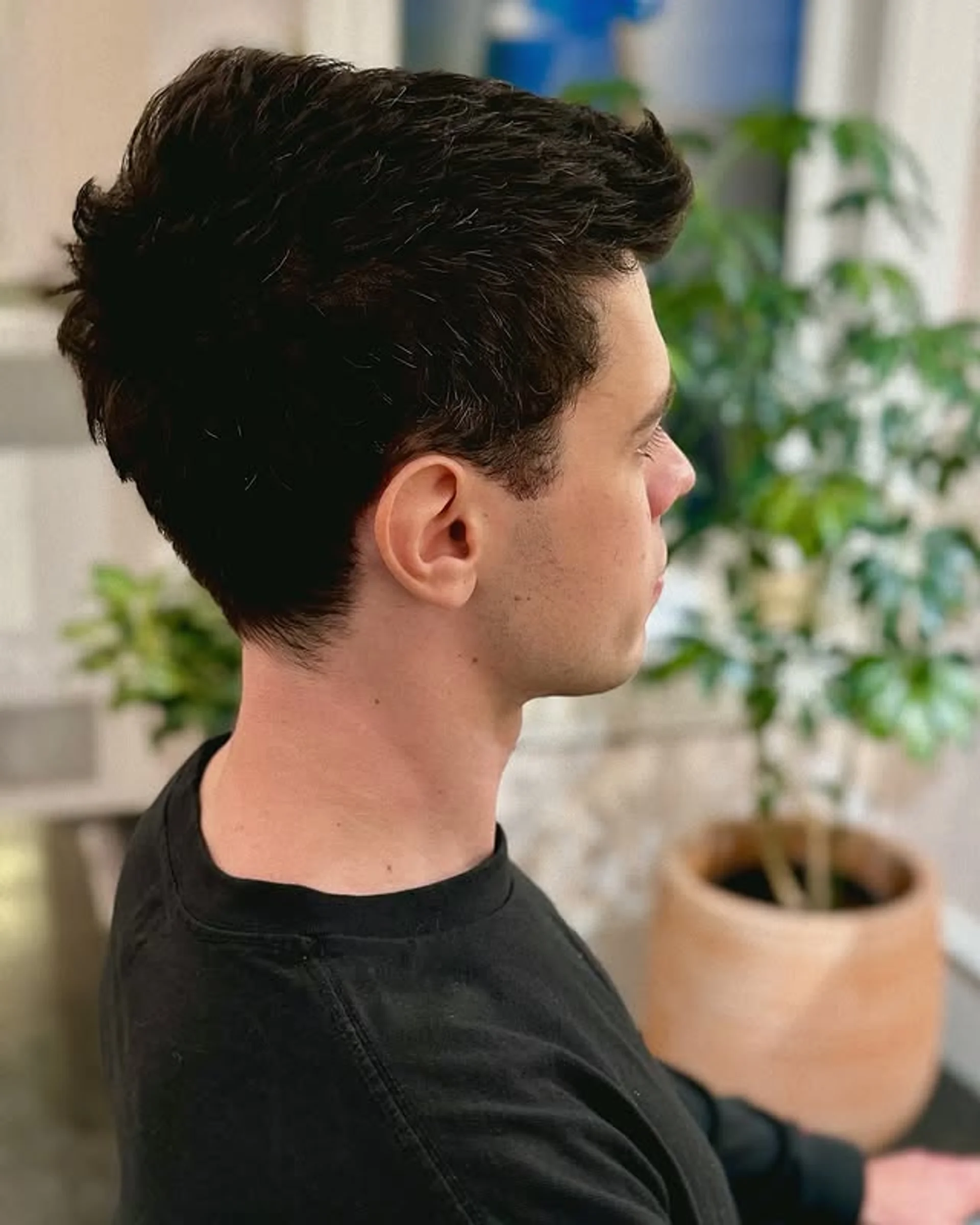
Finding a stylist who excels at men's scissor cuts in San Francisco means looking for visual proof in their portfolio. Instead of searching for barbers who specialize in clipper fades, look for photos that show softer shapes, texture over the ears, and varied neckline finishes. The key tradeoff is choosing between the sharp, immediate precision of a clipper fade and the more forgiving, natural grow-out of a scissor-cut taper or layered perimeter.
The Soft Taper
A clean, graduated finish without harsh lines
A soft or classic taper gradually gets shorter down the back and sides of the head, but often leaves more length and texture than a high-contrast fade. In a portfolio, look for a clean outline at the nape and around the ears that blends smoothly into the longer hair on top. This technique, often done with scissors or a scissor-over-comb method, creates a tailored shape that grows out gracefully.


💬What to Ask Your Stylist
- Could we achieve a soft taper that follows my natural hairline?
- How frequently will I need to come in to keep this taper looking clean?
- What styling products do you recommend to show off the texture while keeping the shape neat?
Best For:
- • A professional or classic look
- • Hair that you don't want to style extensively every day
- • A more forgiving grow-out period than a fade
NYC Price Range:
Ask the salon for a current quote
Maintenance:
This style typically requires touch-ups every 3-5 weeks to maintain the clean lines of the taper. Daily styling can be minimal, often just requiring a bit of paste or cream to define texture.
The Layered Outline
For medium-length hair with natural movement
If you prefer to keep some length over your ears and at the neckline, look for portfolios featuring mid-length styles described as a "flow" or shag. These cuts rely on skilled layering to create shape and remove bulk, allowing hair to move naturally without looking unkempt. The perimeter is often point-cut or textured with scissors to create a soft, piecey edge rather than a solid line.


💬What to Ask Your Stylist
- How can we create a shape that works with my natural wave or curl pattern?
- I'd like to keep length around the ears. Can we layer it so it doesn't look bulky?
- What's the best way to air-dry this cut, and what product should I use?
Best For:
- • Wavy, curly, or textured hair
- • A more casual, lived-in aesthetic
- • Those wanting to grow their hair out
NYC Price Range:
Ask the salon for a current quote
Maintenance:
Medium-length layered cuts can often go 6-10 weeks between appointments, as the softer shape is very forgiving during the grow-out phase. Daily styling might involve sea salt spray or a light cream to enhance natural texture.
The Modern Mullet and Shag
A deliberately disconnected or textured perimeter
Modern mullets and shags are defined by their disconnected shapes—shorter and often highly textured on the sides with significant length left at the back. When looking at portfolios, notice how stylists use scissor techniques like razoring or point-cutting around the ears to create a wispy, detached effect that distinguishes these styles from a simple fade. This is a clear indicator of a stylist comfortable with creative, non-traditional scissor work.


💬What to Ask Your Stylist
- How can we adapt this style for my hair type and head shape?
- What is the daily styling commitment for a cut with this much texture?
- How will the shorter and longer sections grow out, and how often will I need it reshaped?
Best For:
- • Making a style statement
- • Straight, wavy, or curly hair textures
- • Those who enjoy using styling products to create texture
NYC Price Range:
Ask the salon for a current quote
Maintenance:
To keep the intended shape, these cuts may require reshaping every 5-8 weeks. The grow-out can be awkward if not maintained. Daily styling is often necessary, using products like texture powder, paste, or spray to emphasize the layers and separation.
Consultation Tips
Focus on the final shape, not just the tool.
Many stylists use a combination of tools. Instead of saying "I only want scissors," show them photos of the soft edges and textured outlines you prefer. This communicates your goal for the final look, allowing the stylist to choose the best technique to achieve it.
Bring photos of necklines you like.
Even if the hair on top is completely different from yours, a photo clearly showing a tapered, natural, or blocked neckline is an invaluable communication tool. It's one of the hardest things to describe with words alone.
Before You Book
Analyze portfolio photos for soft edges.
When browsing Kiri portfolios, specifically look at the area around the ears and the nape of the neck. Do you see soft, textured hair, or do you see a sharp, faded line? Prioritize stylists whose portfolios show more examples of the former.
Read the service descriptions.
Look for stylists who offer services like "scissor cut," "men's haircut," or "custom cut" rather than just "fade" or "clipper cut." While not a guarantee, it indicates they cater to a clientele seeking more varied cutting techniques.
Save your references.
Save a few inspiration photos from different stylists. During your consultation, you can explain what you like about each one—for example, the texture from one photo and the neckline from another. This gives your chosen stylist a clear and comprehensive picture of your goal.
Compare portfolio photos and discuss your goals with a stylist.