Growing Out a Short Haircut in San Francisco: Interim Shapes and Sections to Keep Growing
How to map out nape trims, crown length, and face-framing layers across San Francisco salons without losing your progress.
Every image you see is a bookable style. Click any photo to view details and book an appointment with a stylist.
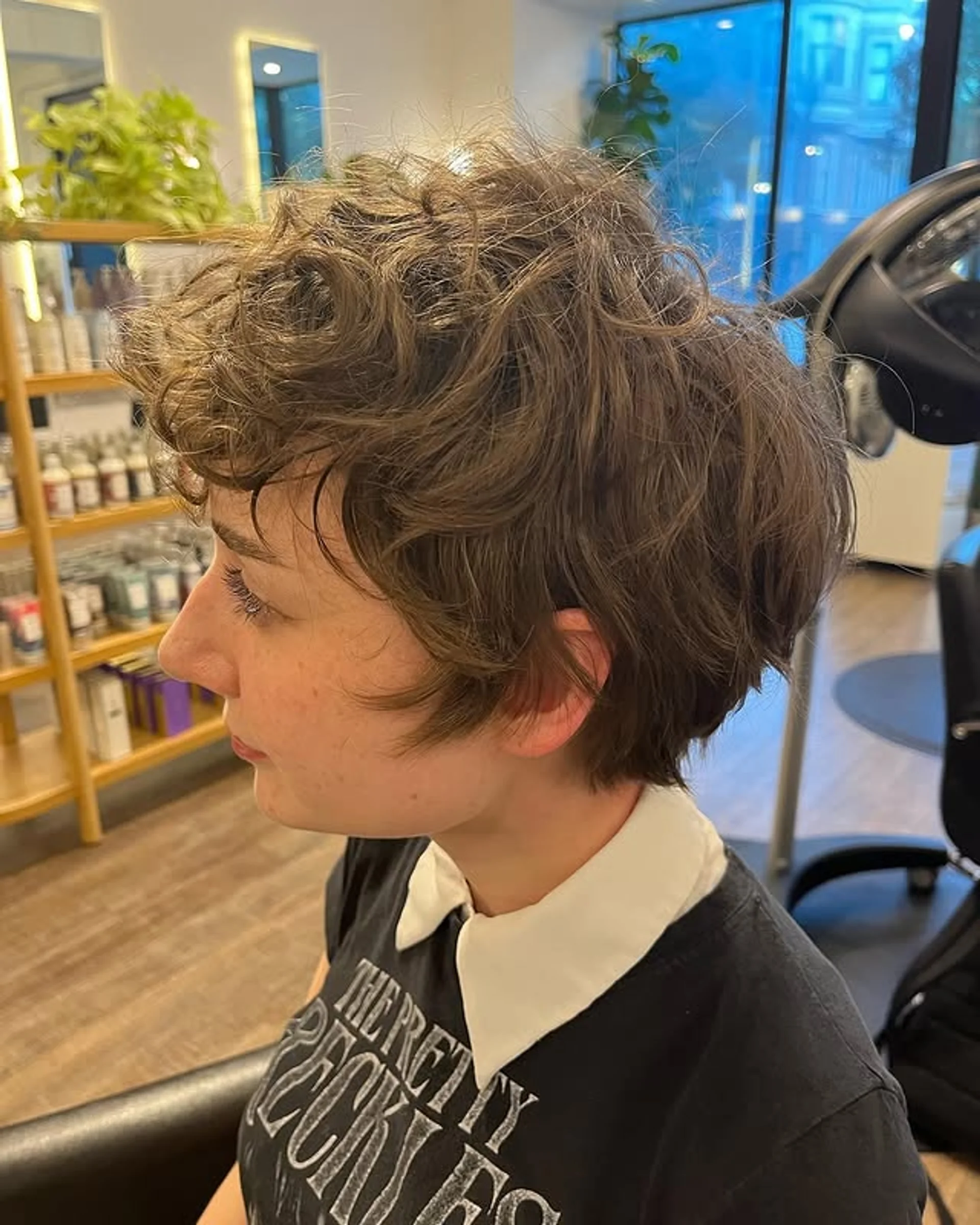
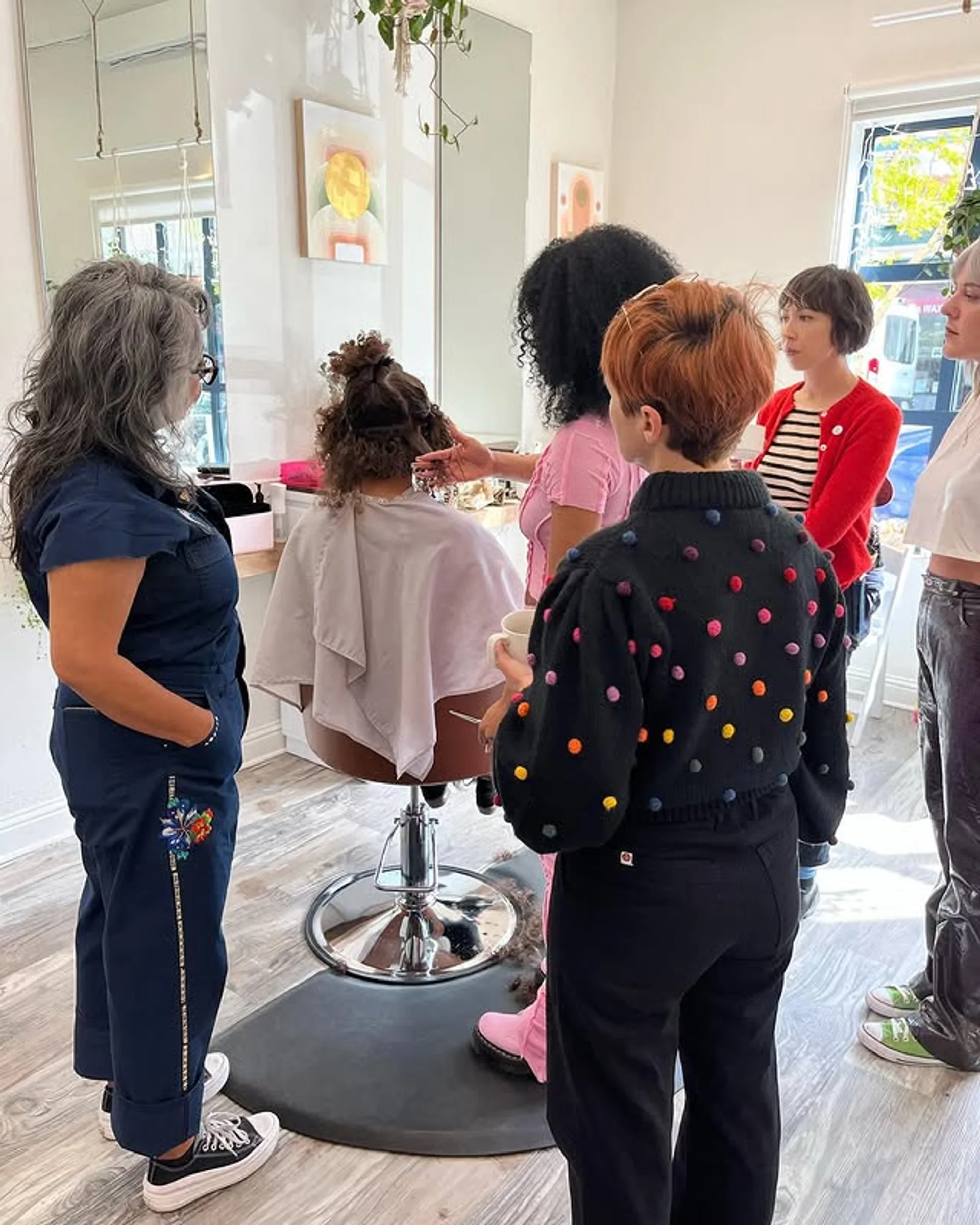

Growing out a short haircut works best when you treat every salon visit as a deliberate interim shape rather than waiting passively for length. The core tradeoff is straightforward: trimming the back and nape keeps the silhouette intentional while top and side sections catch up, whereas skipping perimeter trims builds overall length faster at the cost of heavier bulk around the neck. In your consultation, point to which sections must remain untouched—typically the crown, top, and front sides—and ask how your stylist will lighten weight or refine the hairline so each stage looks purposeful.
Keep the Crown and Top Growing While Refining a Pixie Perimeter
Early-stage shaping when growing out from very short cuts
When transitioning out of a very short cut, the back hairline reaches the collar before the crown and sides reach the ears. Leaving the top and temple areas untouched while tidying the nape prevents a bottom-heavy outline. Portfolio examples from San Francisco salons—such as the Textured Pixie Cut with Natural Waves and Textured Pixie Cut at Oro Hair Salon SF, the Modern Shaggy Pixie with Choppy Bangs at Camellia Salon, and the Textured Pixie Cut: Platinum Blonde at Steel and Lacquer—show how choppy, textured top layers and defined fringe keep short proportions balanced while length builds overhead.


💬What to Ask Your Stylist
- Can we trim only the nape and around the ears while leaving the top and crown completely untouched?
- Should we add light internal texture to the crown so it lays smoothly as it gains weight?
- How should we shape the fringe so it transitions naturally into side-swept or curtain layers later?
Best For:
- • Readers starting from a pixie or cropped cut who want neat edges between appointments
- • Wavy or straight textures that benefit from choppy top separation during early growth
NYC Price Range:
Ask the salon for a current quote
Maintenance:
Ask your stylist for a personalized trim schedule to tidy the nape without slowing down top growth.
Bridge Awkward Mid-Growth Lengths with a Layered Shag
Using intentional layers when top and back lengths do not match yet
If you want to preserve every bit of length at the back while the upper layers are still catching up, a layered shag uses disconnected tiers to your advantage instead of fighting them. Examples like the Modern Shag Bob with Soft Layers, 70s Shag Haircut with Curtain Bangs, and Modern Shag with Blunt Bangs at Steel and Lacquer, alongside the Modern Shag with Baby Bangs at Oro Hair Salon SF, demonstrate how graduated crown layers and defined bangs frame the face while the perimeter continues growing toward the collarbone.


💬What to Ask Your Stylist
- Which upper layers should keep growing uncut, and which sections need weight removed so the silhouette does not triangle out?
- Can we adapt my existing short bangs into baby bangs, blunt bangs, or parting curtain bangs as an interim feature?
- Will keeping the back length intact right now make it easier or harder to level into a bob later?
Best For:
- • Grow-outs focused on retaining maximum back length rather than frequent perimeter trims
- • People who like visible texture, movement, and fringe framing through mid-length stages
NYC Price Range:
Ask the salon for a current quote
Maintenance:
Discuss how to style layered ends and ask your stylist when bangs or crown weight need subtle reshaping.
Shape a Short or Inverted Bob While Front Sides Catch Up
Letting front panels lengthen while keeping the back clean
Once top layers reach ear or cheekbone length, a short bob becomes a practical milestone. An angled or stacked back lets you keep the nape tidy while preserving every millimeter along the front sides—illustrated by the Inverted Bob with Highlights and Textured Curly Bob at Steel and Lacquer, plus the Short Layered Bob with Silver Highlights and Layered Bob with Highlights at Sanctuary Salon. Discussing which side and front sections are off-limits to scissors ensures the front perimeter catches up cleanly.


💬What to Ask Your Stylist
- Can we keep the back slightly shorter or softly stacked while leaving the front sides untouched to gain length?
- How much layering should stay in the crown so curls or waves do not puff outward at the sides?
- If I am aiming for a one-length bob next, should we start reducing layers at the nape now?
Best For:
- • Hair transitioning from ear-length crops into a structured chin-length shape
- • Straight, layered, or curly textures needing controlled volume around the jawline
NYC Price Range:
Ask the salon for a current quote
Maintenance:
Ask your stylist for a personalized maintenance plan covering back-of-neck cleanups and curl or wave styling.
Even Out the Perimeter with a Blunt Chin-to-Collarbone Bob
Resetting the baseline before growing past the shoulders
At chin to mid-neck length, leveling off wispy or uneven ends into a blunt baseline gives your grow-out a clean reset before the hair hits the shoulders. Portfolio styles such as the Blunt Bob Haircut at Oro Hair Salon SF, Blunt Bob Haircut at Sanctuary Salon, and the Sleek Blunt Bob Haircut and Sleek Blonde Bob Haircut at SpokeAndWeal SF show how an even perimeter creates immediate fullness. The tradeoff is sacrificing a little back length at one appointment so all sections can grow downward together from an even line.


💬What to Ask Your Stylist
- Have my shortest crown layers grown long enough to meet a clean blunt perimeter?
- How much length do we need to take from the back so the front and sides sit level?
- Should we leave the ends completely blunt to build weight, or soften the underside slightly if my hair is dense?
Best For:
- • Readers ready to graduate from staggered short layers into one cohesive baseline
- • Straight or smoothed styles where an even line makes the transition look deliberate
NYC Price Range:
Ask the salon for a current quote
Maintenance:
Consult your stylist on how often to dust the blunt perimeter while letting the overall length drop toward the shoulders.
Transition Past the Shoulders with Face-Framing Medium Layers
Blending shorter front pieces as overall length reaches the collarbone
As a grow-out clears the shoulders, leftover shorter pieces around the temples and fringe can sit awkwardly unless they are connected into gradual face-framing layers. Medium-length portfolio cuts—including the Layered Medium Haircut with Face-Framing Layers and Golden Layered Medium Cut at Sanctuary Salon, alongside the Layered Brunette Medium Length Haircut and Layered Golden Blonde Medium Length Haircut at Steel and Lacquer—illustrate how long face-framing pieces blend shorter front sections into shoulder-skimming length without cutting away your hard-earned perimeter.


💬What to Ask Your Stylist
- Can we connect my growing fringe and temple pieces into soft face-framing layers without touching the bottom perimeter?
- How do we keep the ends thick enough as the hair passes the shoulders?
- Where should the shortest face-framing piece start so it still tucks behind my ears if I want?
Best For:
- • Mid-to-late grow-out stages reaching the collarbone and shoulders
- • Anyone blending shorter bangs or cheek-length layers into medium-length hair
NYC Price Range:
Ask the salon for a current quote
Maintenance:
Ask your stylist for a personalized maintenance plan focused on dusting split ends and refining face-framing pieces.
Consultation tips
Name the exact sections that are off-limits
Tell your stylist at the start of the appointment which areas must keep growing untouched—typically the crown, top, or front sides—so trims stay focused on the nape or weight removal.
Choose your next interim milestone, not just your final goal
Bringing a photo of your end goal helps, but picking a current-stage reference (such as a textured pixie, short shag, or inverted bob) lets your stylist shape what you have today.
Clarify your preferred fringe direction
Shorter front pieces can either be trimmed into an intentional bang or parted and left alone to join future face-framing layers; deciding early avoids conflicting cuts.
Check how much effort your daily styling takes
Some interim shapes rely on smooth blowouts while others work with natural wave or curl separation—match the interim cut to the routine you actually want to keep.
Before you book
Compare San Francisco portfolio photos by current length and texture
Pick references that match your hair texture and current shortest layer rather than jumping straight to long-hair photos.
Book a consultation or maintenance cut with clear grow-out notes
Mention in your booking notes that you are actively growing out a short haircut and want an interim shape plan.
Confirm pricing and follow-up cadence in person
Ask your San Francisco salon directly for current service quotes and how frequently to schedule small perimeter cleanups.
Compare portfolio photos and discuss your interim shape with a San Francisco stylist.