Growing Out a Two-Block Cut: A Trim-by-Trim Plan
How to manage the awkward growth phase by establishing an intentional transition shape.
Every image you see is a bookable style. Click any photo to view details and book an appointment with a stylist.
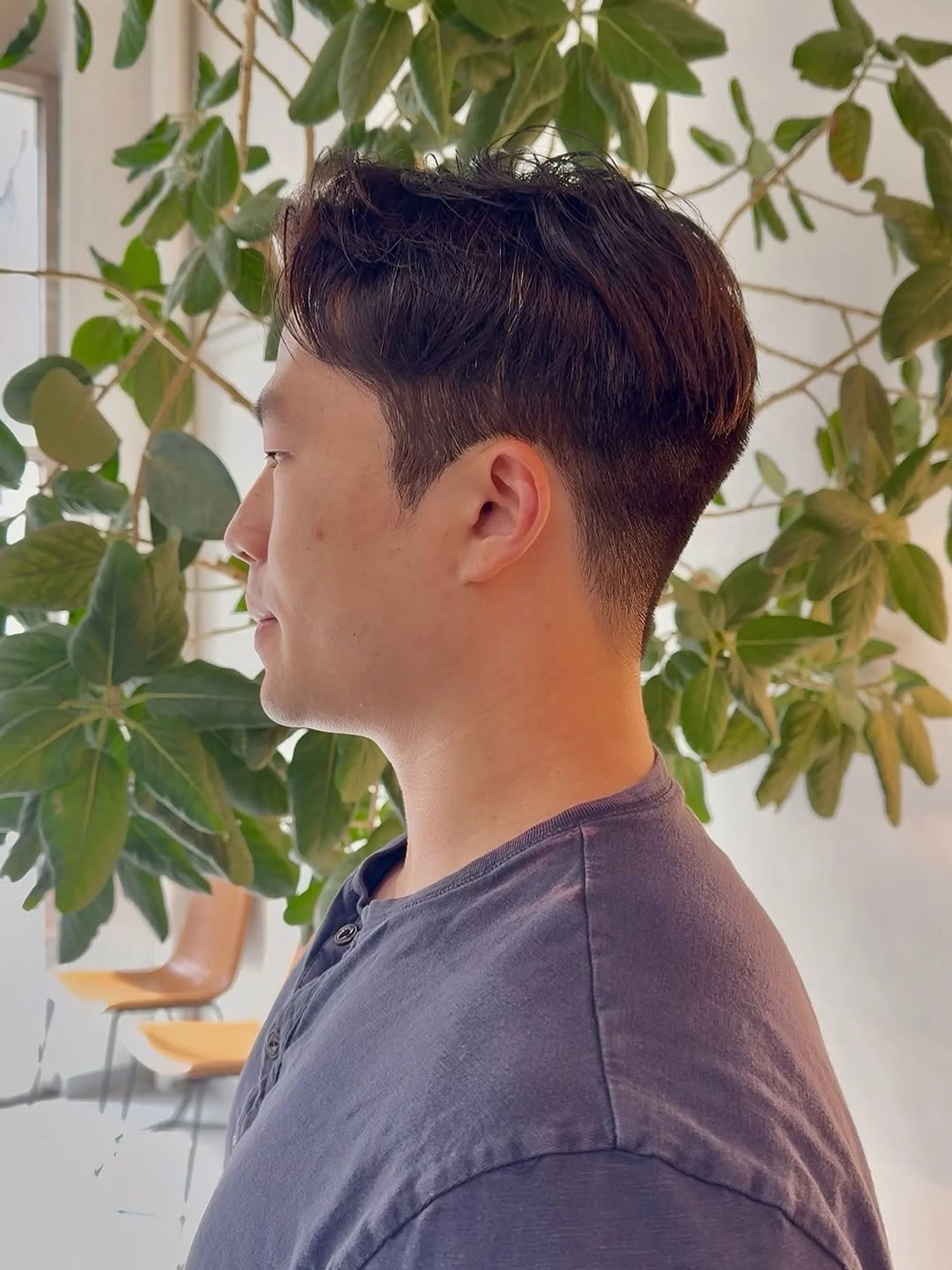
Growing out a two-block haircut requires managing the stark length difference between the heavy top section and the closely clipped sides and back. Instead of waiting for everything to even out naturally—which often results in a bulky, disjointed shape—you can work with your stylist to establish an intentional transition style. The primary tradeoff during this process is deciding whether to sacrifice some length on top to re-establish a blend with the sides, or to maintain the top length to camouflage the undercut while it catches up.
Blending with a Taper Fade
Reconnecting the disconnected layers
One of the most direct ways to exit a two-block is to begin blending the overhanging top into the sides. By introducing a taper fade, the stylist gradually reduces the severe contrast. As the top is trimmed slightly each visit, the sides are given time to fill out, creating a cohesive, modern silhouette without the harsh undercut line.


💬What to Ask Your Stylist
- How much length needs to be removed from the top to create a blended transition with the sides?
Best For:
- • Readers willing to sacrifice some top length for a neater, more professional shape during the transition.
NYC Price Range:
Ask the salon for a current quote
Maintenance:
Explain your daily styling routine and ask the stylist for a personalized maintenance plan to keep the taper looking clean.
Transitioning into a Mullet Hybrid
Letting the neckline drop
Because a standard two-block often features a short, clipper-cut back, allowing the nape to grow out naturally shifts the overall proportion of the haircut. By preserving the length at the back while the sides remain relatively shorter, the style temporarily morphs into a mullet or wolf-cut hybrid. This intentional shape distracts from the uneven side lengths.

💬What to Ask Your Stylist
- Can we shape the back to flow nicely into a mullet while the undercut sides grow out?
Best For:
- • Readers aiming for a longer overall hairstyle who don't mind an edgier, textured silhouette.
NYC Price Range:
Ask the salon for a current quote
Maintenance:
Discuss how often the top and neckline need texturizing to prevent the mullet shape from becoming too heavy.
Masking Awkward Stages with a Perm
Blurring the lines with wavy texture
Straight hair highlights the exact point where a disconnected top falls over short sides. Introducing waves or curls through a perm adds volume that naturally conceals uneven lengths and blurs the hard dividing lines of a growing two-block. The texture integrates the top and sides more cohesively as they catch up to each other.
💬What to Ask Your Stylist
- Is my hair currently healthy enough for a perm, and what rod size would best disguise the disconnect?
Best For:
- • Straight hair textures that tend to look rigid or mushroom-like when growing over an undercut.
NYC Price Range:
Ask the salon for a current quote
Maintenance:
Ask your stylist for a personalized routine covering hydration, wave-defining products, and drying techniques.
The Curtain Fringe Drape
Hiding the sides beneath a longer top
If your ultimate goal is a medium or long hairstyle, trimming the top to blend the sides is counterproductive. Instead, maintaining the length and sweeping the top into a center-parted curtain fringe allows the hair to drape over the undercut. This effectively hides the sides while they grow until they are long enough to tuck behind the ears or blend naturally.

💬What to Ask Your Stylist
- How should we texturize the curtain fringe so it falls cleanly over the sides without looking too bulky?
Best For:
- • Readers committed to retaining their top length who want to completely hide the sides during the growth process.
NYC Price Range:
Ask the salon for a current quote
Maintenance:
Explain your routine and ask for styling techniques to maintain root volume in a center part.
Consultation tips
Define your end goal early
Telling your stylist your final desired length helps them decide whether to trim the top to meet the sides now, or leave the top long to act as a cover while the sides catch up.
Address bulk and weight distribution
As a disconnected cut grows, the hair often builds unwanted weight right at the temple line. Strategic thinning can reduce this bulky silhouette without taking away necessary length.
Before you book
Compare relevant portfolio photos
Select references that closely match your hair's natural wave and density, so the stylist can realistically assess which transitional shape will work best for your current length.
Plan for multiple appointments
Growing out an extreme disconnect isn't solved in one visit. Book with the understanding that you are beginning a multi-step reshaping process.
Compare portfolio photos and discuss your goals with a stylist.