How to Compare a Shag and a Layered Cut for Everyday Wear
Evaluate crown length, fringe upkeep, perimeter density, and daily styling effort before you choose your shape.
Every image you see is a bookable style. Click any photo to view details and book an appointment with a stylist.


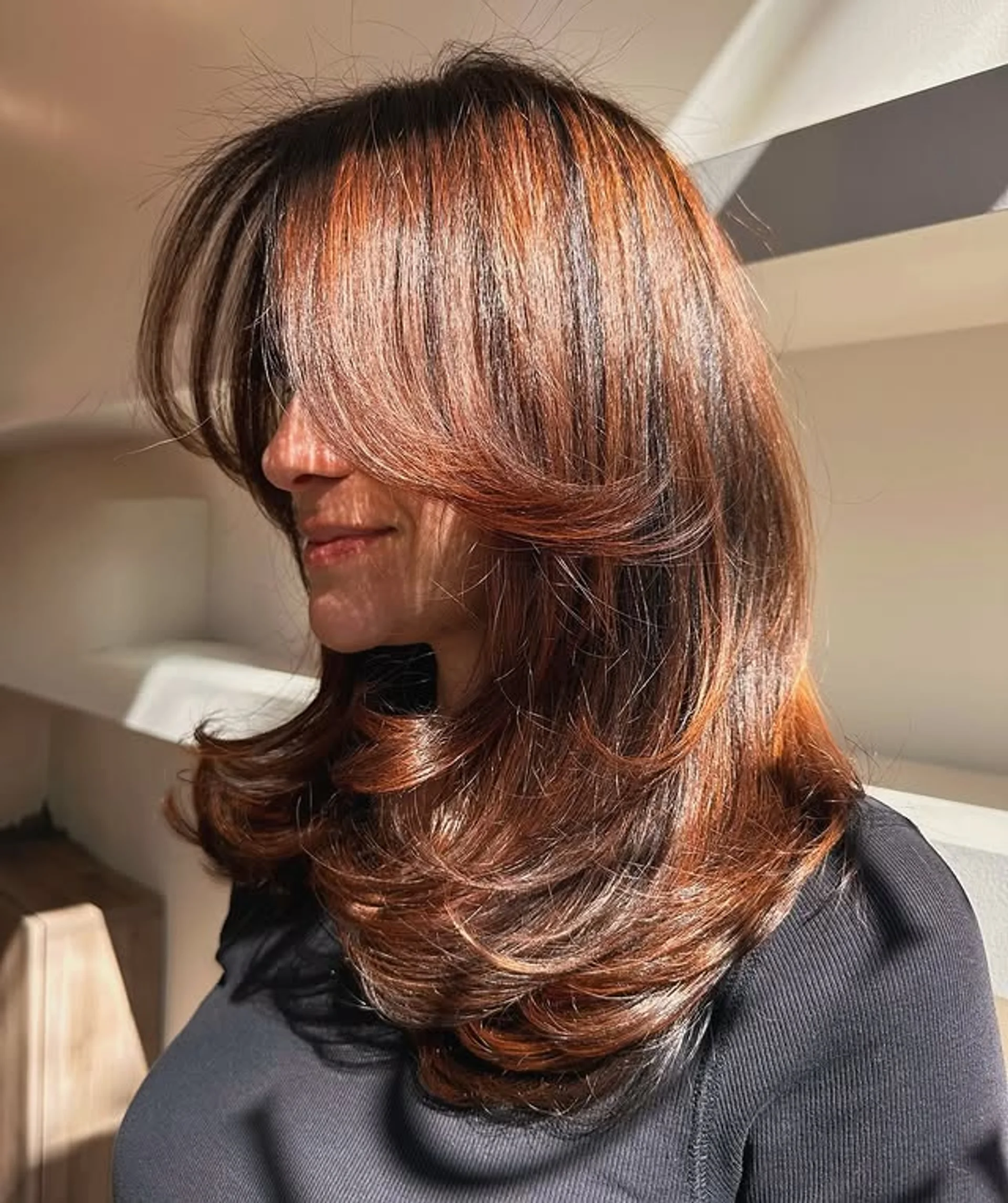
Choose a classic layered cut when you want longer crown layers, a fuller bottom perimeter, and an easier grow-out; choose a shag when you want shorter layers at the crown, a lighter and more tapered outline, and stronger fringe integration. In everyday wear, the biggest difference is where weight sits and how much morning work your natural texture needs: a layered cut usually looks finished when brushed smooth or left in long waves, while a shag relies on crown lift and piecey ends that can flatten or flip differently depending on density and humidity.
Longer-Crown Layered Cuts for a Fuller Perimeter
More bottom weight and gradual face-framing
Compared with a traditional choppy shag, a softer layered haircut keeps the shortest top layers longer so the transition from crown to ends stays smooth. In straight portfolio examples like Long Layered Haircut with Curtain Bangs, Curtain Bangs with Layered Shoulder Length Haircut, and Copper Brunette Layered Haircut with Curtain Bangs, movement concentrates around the jawline and collarbone while the lower perimeter retains visual thickness. On curls, as shown in Long Layered Curly Haircut, longer internal layers prevent triangle bulk without leaving the ends sparse. If you tie your hair back often or dislike wispy tips, keeping a fuller perimeter makes daily wear simpler.


💬What to Ask Your Stylist
- Where will my shortest crown layer sit relative to my cheekbones or chin?
- Can we keep the bottom perimeter dense enough that my ends do not look thin when pulled back?
- How much internal weight should stay so my texture bends smoothly instead of flipping out?
Best For:
- • People who want movement without losing thickness at the ends
- • Readers who wear their hair in low ponytails or clips during the week
- • Straight or curly textures looking for gradual grow-out between trims
NYC Price Range:
Ask the salon for a current quote
Maintenance:
Longer crown layers generally grow out softly without losing their overall outline, though curtain fringe still needs occasional shaping; ask your stylist for a personalized maintenance plan.
High-Crown Wolf Cuts and Choppy Shags
Shorter top layers with a noticeably tapered outline
If your main goal is lift at the crown and clear separation between top and bottom lengths, wolf-cut shags sit at the opposite end of the spectrum from a blended layered cut. Portfolio references such as Textured Shag Wolf Cut with Curtain Bangs and Modern Textured Wolf Cut Shag pair substantial crown volume with wispy, narrower ends, while Layered Wolf Cut with Wispy Bangs and Long Layered Wolf Cut stretch that contrast over longer straight hair. The tradeoff for everyday wear is two-fold: shorter crown pieces can require intentional styling to sit smoothly on straight hair, and the lighter perimeter may feel too thin if you prefer a blunt bottom edge.


💬What to Ask Your Stylist
- Do I have enough hair density at the nape to support a tapered perimeter without looking sparse?
- How short can the crown layers go before they stick up on my natural texture?
- What styling product or blow-dry direction does this crown shape need on non-wash days?
Best For:
- • Medium-to-thick hair that feels heavy without strong weight removal
- • Readers who want built-in height at the crown rather than flat roots
- • People comfortable with wispy, separated ends instead of a solid hemline
NYC Price Range:
Ask the salon for a current quote
Maintenance:
Shorter crown layers and wispy bangs can shift shape quickly as they grow; ask your stylist how often the top and fringe need reshaping for your texture.
Curtain Bangs as the Bridge Between Both Cuts
How fringe placement changes morning upkeep and grow-out
Fringe is often what makes a haircut feel like a true shag versus a standard layered cut. Full eyebrow-skimming bangs create an immediate shag silhouette but require frequent trims and daily taming around cowlicks. By contrast, parted curtain bangs bridge both options: they connect smoothly into cheekbone layers on straight hair (Long Blonde Layered Shag with Curtain Bangs and 70s Layered Shag with Curtain Bangs) and blend naturally into wavy movement (Effortless Layered Shag with Curtain Bangs and Curtain Bangs Shag Haircut). Because they split off the center, curtain bangs can be tucked behind the ears on busy mornings and grow into standard face-framing layers with less awkwardness.


💬What to Ask Your Stylist
- Where should the shortest center piece hit—bridge of the nose, cheekbones, or jaw?
- Will my hairline or cowlick cause curtain bangs to split unevenly without heat styling?
- Can we connect the fringe into longer temple layers so I can still pin or tuck it back?
Best For:
- • Readers testing a shag-inspired front without committing to blunt bangs
- • People who want forehead framing that can still be parted away from the eyes
- • Both straight and wavy textures seeking softer grow-out between appointments
NYC Price Range:
Ask the salon for a current quote
Maintenance:
Curtain bangs typically need lighter upkeep than full blunt fringe, though quick bang refreshes may still be helpful; confirm a realistic schedule with your stylist.
Mid-Length Shags and Real-World Styling Effort
Matching layer choppiness to what your hair does naturally
Many shoulder-to-mid-length shags are tagged as low-maintenance, but everyday ease depends on matching the cut to your natural bend. On wavy hair—such as Layered Shoulder Length Shag, Mid-Length Shag Haircut with Wispy Layers, and Long Layered Shag with Curtain Bangs—choppy mid-length layers can encourage waves to stack and move without feeling heavy at the shoulders. On straight hair like Mid-Length Layered Shag, choppy ends create clean texture, yet achieving curved face-framing or crown volume often takes a round brush, iron, or light styling cream. Before picking a shag over a simpler layered cut, decide how much styling time you want to spend on ordinary weekdays.


💬What to Ask Your Stylist
- How will this cut behave on days I skip heat tools or only blow-dry the front?
- Should we keep the perimeter slightly longer than my collarbone to avoid shoulder flip?
- Which single styling step makes the biggest difference for my hair texture?
Best For:
- • Wavy textures wanting lighter weight around the shoulders
- • Straight textures willing to spend a few minutes shaping the front pieces
- • People who prefer tousled separation over a uniform, sleek silhouette
NYC Price Range:
Ask the salon for a current quote
Maintenance:
Everyday effort depends on your hair's natural wave pattern and porosity; ask your stylist for a simple wash-and-style routine tailored to your schedule.
Consultation tips
Separate the front request from the back request
You can pair curtain bangs or shag-like face framing with a longer-crown layered back if you want movement near your face without thinning out your lower perimeter.
Check your natural part and hairline first
Point out any cowlicks, strong side parts, or sections that flatten easily so your stylist can set the crown and fringe lengths accordingly.
Be honest about your weekday routine
Tell your stylist whether you air-dry, rough-dry, or round-brush most mornings—that single detail should decide how choppy or short your top layers go.
Before you book
Bring two contrasting references
Save one layered cut with a fuller perimeter and one higher-crown shag with a similar starting texture so you can point out exactly where you want to land between them.
Test how you want to wear it up
If you put your hair in a ponytail or claw clip for work or workouts, tell your stylist before cutting short crown layers or heavy fringe.
Confirm trim and styling expectations
Ask the salon for a current service quote, how the cut will evolve as it grows, and what minimal products suit your hair type.
Compare portfolio photos and discuss your goals with a stylist.