San Francisco Haircut Consultations for Thick Wavy Hair: Managing Bulk, Dry Length, and Perimeter Weight
How to align on layer placement, shrinkage, and baseline fullness before the first cut
Every image you see is a bookable style. Click any photo to view details and book an appointment with a stylist.
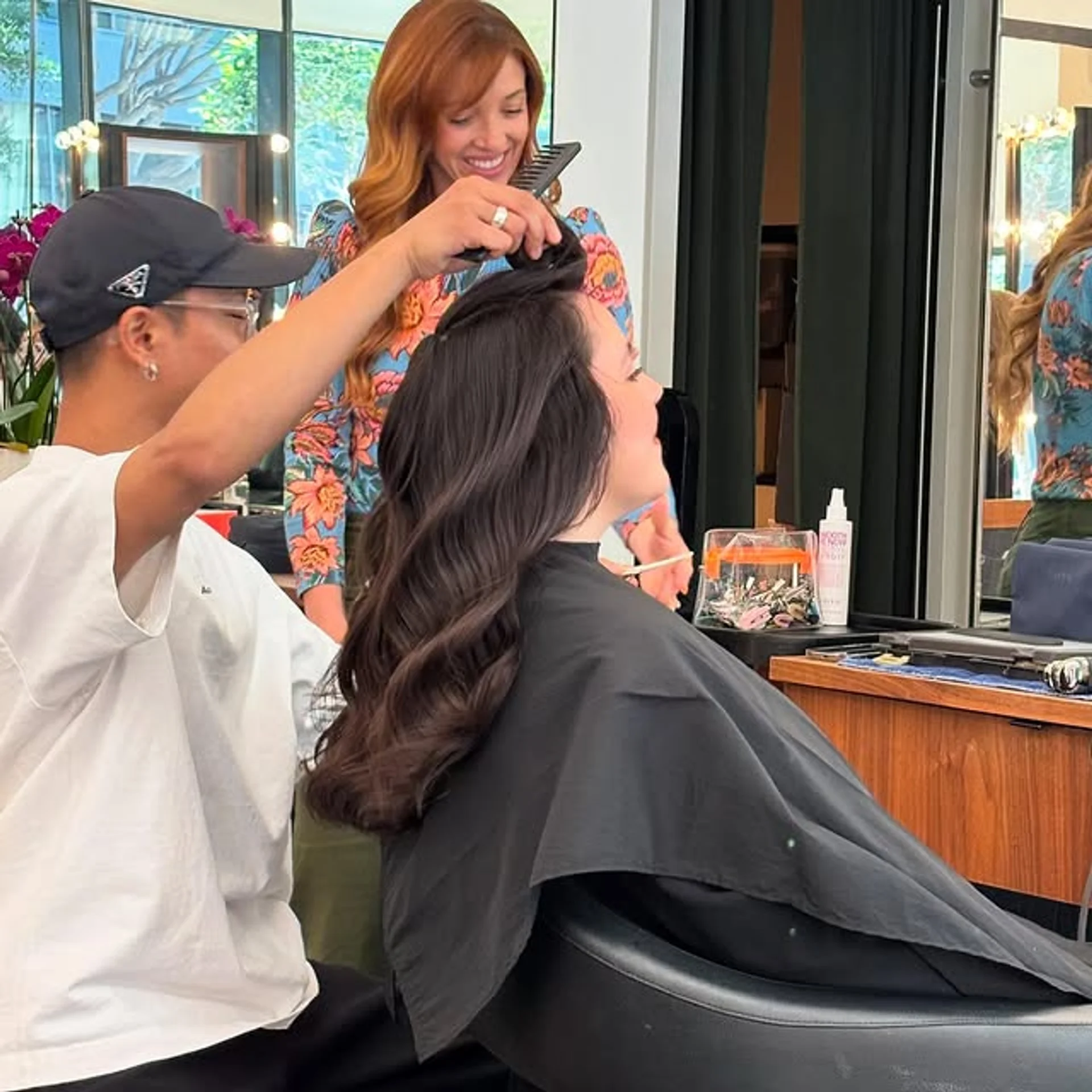
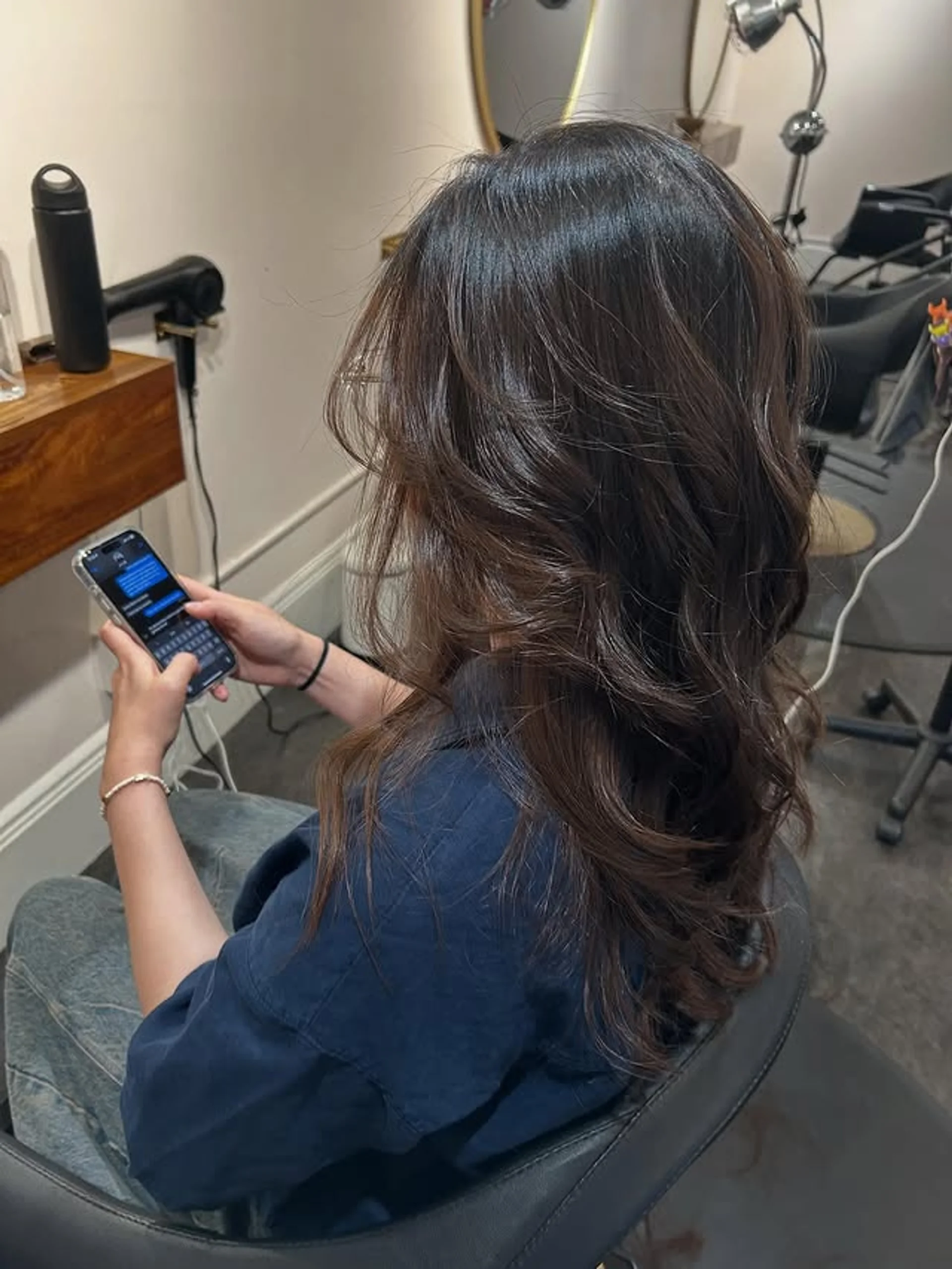
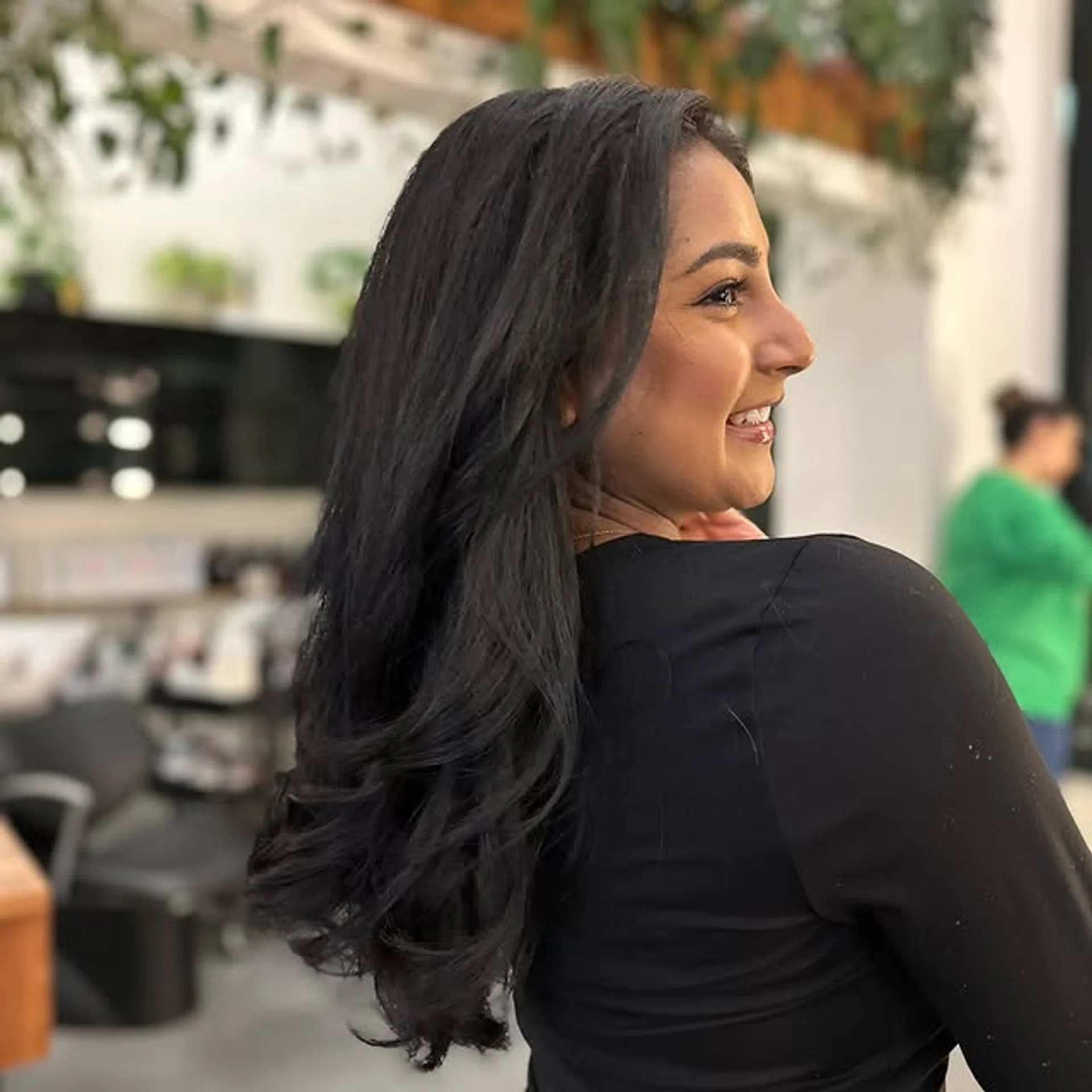
When you have thick wavy hair, the main consultation decision is deciding where to keep weight and where to release bulk—not chasing a single promised air-dry outcome. Removing too little internal density can leave the bottom heavy and wide, while over-thinning or layering too aggressively can make waves lose cohesion, frizz, or spring up shorter than expected once dry. Because salon photos often show finished styling rather than an unstyled dry state, use San Francisco portfolio examples to talk concretely with your stylist about dry length, perimeter weight, and how much daily styling you are willing to do.
Long Layered Cuts for Weight Distribution
Releasing mid-shaft bulk while keeping a longer silhouette
If you want to keep length without feeling weighed down, ask how layers will step through the mid-lengths and ends rather than thinning near the roots. Portfolio examples such as the Long Brunette Wavy Hair with Face-Framing Layers from Steel and Lacquer and Soft Wavy Layers from Camellia Salon show how graduated movement distributes fullness across longer waves, while Long Layered Waves Haircut and Long Layered Wavy Hairstyle from Steel and Lacquer illustrate fuller lower lengths with softer layering. Because wavy hair contracts as it dries, confirm your target dry length below the collarbone or shoulder blades before wet cutting begins.


💬What to Ask Your Stylist
- Where do you plan to start the shortest layer relative to my cheekbones or collarbone when dry?
- Will you manage bulk with structured layering or internal weight removal, and how does that grow out?
- How much shorter will the top layers sit compared to my dry perimeter length?
Best For:
- • Thick wavy hair that feels heavy around the shoulders
- • Readers who prefer keeping overall length while reducing mid-shaft density
- • Routines that alternate between air-drying with product and heat styling
NYC Price Range:
Ask the salon for a current quote
Maintenance:
Regular trims help keep ends from splitting and stop lower weight from stacking; ask your stylist for a personalized maintenance plan.
Wavy Bobs and Perimeter Weight Control
Balancing a clean baseline against triangle-shaped fullness
Shortening thick wavy hair into a bob brings perimeter weight straight to the jawline or shoulders, where waves naturally expand outward. The Wavy Brunette Bob from Sanctuary Salon and Wavy Bob with Face-Framing Highlights from Steel and Lacquer show fuller, shoulder-skimming baselines, while the Modern Wavy Bob with Textured Ends from Oro Hair Salon SF and Voluminous Wavy Bob from Camellia Salon show how broken-up ends and subtle layering soften the bottom edge. Your key tradeoff is clear: a heavier perimeter feels solid and structured when styled, whereas textured ends reduce bulk at the bottom but may look lighter and more rounded as waves dry naturally.


💬What to Ask Your Stylist
- If you cut my bob to this wet length, where will the dry perimeter land once my wave pattern springs up?
- How will you prevent the bottom edge from flaring out into a triangle shape between washes?
- Do you recommend keeping the baseline fuller or softening the ends for my specific hair density?
Best For:
- • Readers ready for a chin-to-shoulder reset who want clear shape around the jaw
- • Thick hair that needs deliberate perimeter tapering to sit close to the neck
- • People willing to diffuse, air-dry with hold, or lightly bend ends on wash days
NYC Price Range:
Ask the salon for a current quote
Maintenance:
Shorter perimeters show shape shifts quickly as length grows; ask your stylist for a personalized trim schedule.
Wavy Shags for Crown and Mid-Length Bulk
Trading a heavy one-length feel for higher movement
When thick hair traps heat or forms a heavy block through the back and sides, a shag removes substantial weight around the crown and cheekbones while tapering the lower perimeter. Examples like Modern Shag with Bangs and Modern Shag with Face-Framing Layers from Oro Hair Salon SF, alongside Long Layered Shag with Curtain Bangs from Sanctuary Salon and Shaggy Brunette with Curtain Bangs from Oro Hair Salon SF, show how higher layers shift volume upward. The tradeoff is commitment: shorter crown layers cannot always be tucked neatly behind the ears, and natural drying results vary widely depending on whether your wave bends cleanly or expands with humidity.


💬What to Ask Your Stylist
- How high will the shortest crown layers sit, and will they still tuck behind my ears or fit in a clip?
- How much perimeter density will remain at the bottom so the ends do not look overly sparse?
- What styling product or drying routine works best if my waves react to coastal dampness or wind?
Best For:
- • High-density wavy hair that feels overly bulky or heavy at the crown
- • Readers comfortable with visible texture, movement, and shorter top pieces
- • Those who do not expect a uniform, sleek air-dry without product support
NYC Price Range:
Ask the salon for a current quote
Maintenance:
Shag shapes rely on balanced crown and fringe proportions; ask your stylist for a personalized maintenance plan.
Curtain Bangs and Front Bulk Management
Opening up the face without losing your back perimeter
If most of your frustration comes from thick sections falling forward into your face, adding curtain bangs and front face-framing layers can lighten the front without forcing a full shag or short chop. Long Layered Haircut with Curtain Bangs from Steel and Lacquer, Curtain Bangs Long Layered Haircut and Curtain Bangs with Face Framing Layers from Sanctuary Salon, and Curtain Bangs with Long Layers from SpokeAndWeal SF illustrate how parted front pieces blend into longer wavy lengths. Because front pieces are often lighter and more reactive than the back, verify where the shortest fringe edge lands dry—especially if you have a cowlick or tight bend near the hairline.


💬What to Ask Your Stylist
- Can we measure the shortest curtain bang point dry so it clears my eyes when my wave shrinks?
- How wide into my temple density will the curtain section go?
- What happens to the front shape on days I skip a round brush and let my hair dry naturally?
Best For:
- • Thick wavy hair that feels heavy around the cheeks and temples
- • Readers wanting noticeable shape around the face while preserving back perimeter weight
- • Anyone willing to adjust or pin back front pieces as they grow between visits
NYC Price Range:
Ask the salon for a current quote
Maintenance:
Curtain bangs shift length quickly around the eyes and cheekbones; ask your stylist for a personalized trim and styling plan.
Consultation tips
Arrive with your hair styled the way you wear it most days
Showing your stylist how your natural bulk, part, and wave contraction behave when dry helps them judge dry length and perimeter weight more accurately than photos alone.
Separate styling from cut shape in your reference photos
Portfolio images often reflect salon blowouts or finished waves; point out the layer placement and length you want rather than assuming the finish happens automatically on wash day.
Agree on dry-length checkpoints before any wet cutting
Wavy hair stretches when wet and rebounds as it dries, so confirming the dry target for your fringe, shortest layer, and baseline prevents unexpected shrinkage.
Before you book
Compare San Francisco portfolio photos by length and density
Browse the linked Kiri styles and save two or three references that match how much perimeter fullness and layering you want.
Prepare a short list of your daily routine limits
Note how often you wash, whether you air-dry or use heat tools, and whether you need layers long enough to tie back.
Confirm pricing and timing directly with your chosen salon
Ask your San Francisco stylist for a current quote, realistic maintenance schedule, and any dry-cut or consultation prep instructions before your appointment.
Compare San Francisco portfolio photos and discuss your texture goals with a stylist.