Fine Hair in San Francisco: Layers vs. Fuller Ends for Natural Movement
A guide to choosing between soft layers and stronger shapes, with local San Francisco hairstyle examples.
Every image you see is a bookable style. Click any photo to view details and book an appointment with a stylist.

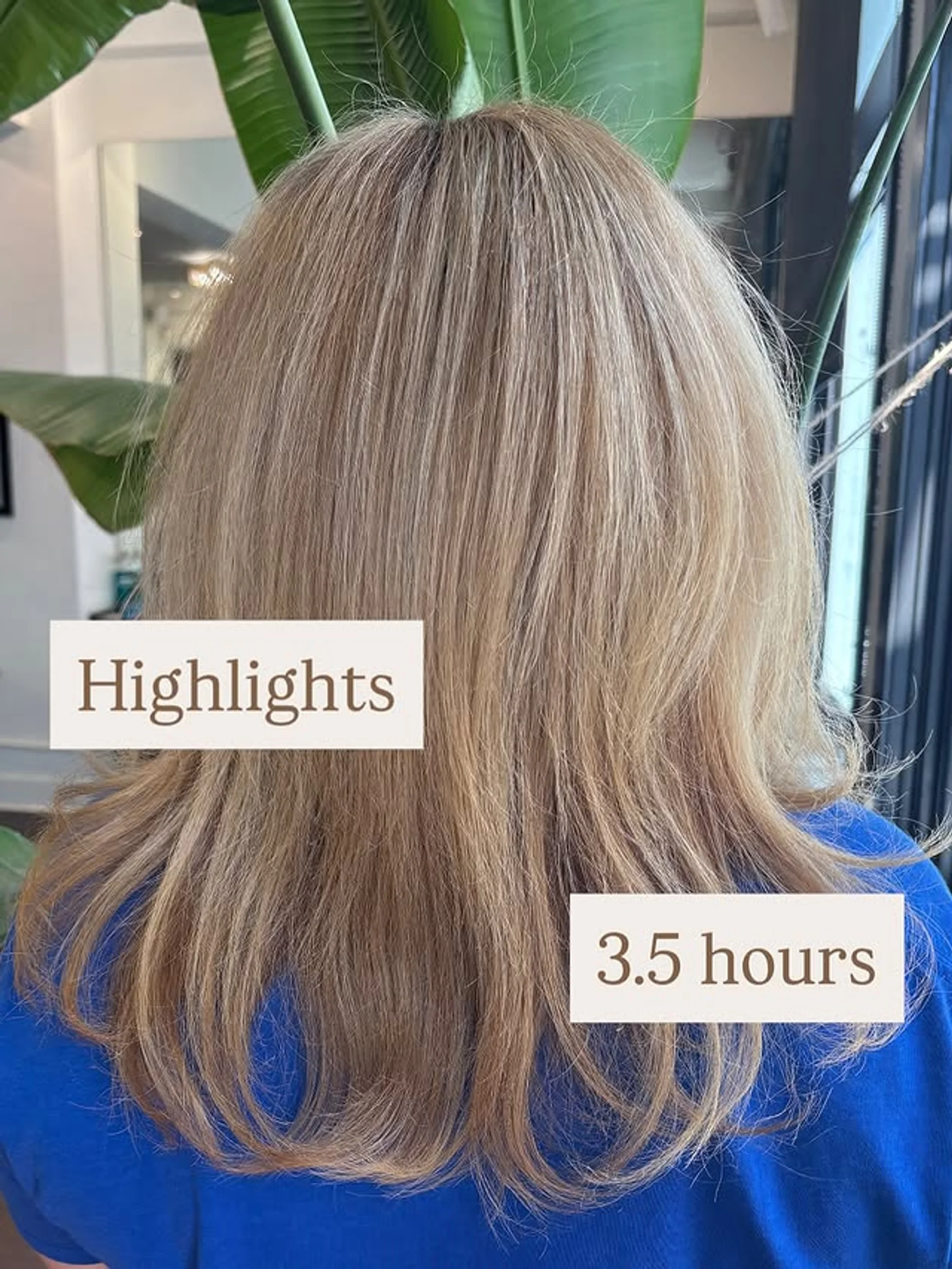

For those with fine hair, the main decision for achieving natural movement is a tradeoff: soft layers add texture but can remove density, while fuller, blunter ends create the illusion of thickness but can sometimes feel heavy. The best choice depends on whether you want to prioritize all-over movement or a stronger, fuller-looking perimeter. Below, we compare different approaches using examples from San Francisco salons to help you find the right balance for your hair.
Soft Layers for All-Over Movement
This approach uses subtle, well-placed layers to create texture and body without making ends appear sparse.
Instead of heavy or short layers, this technique focuses on longer, diffused layers that blend seamlessly. This builds shape and encourages natural waves to form, helping fine hair look more dynamic and less flat. The key is restraint—enough layers to create movement, but not so many that they sacrifice the hair's overall weight and density.


💬What to Ask Your Stylist
- Can we add soft, long layers for movement while ensuring the ends still look as full as possible?
- How would my natural hair texture respond to subtle, diffused layering?
Best For:
- • Enhancing natural waves or adding body to straight hair.
- • Those who want a low-maintenance style that encourages air-drying.
- • Adding shape and interest to longer hair.
NYC Price Range:
Ask the salon for a current quote
Maintenance:
Trims are typically needed every 8-12 weeks to maintain the shape of the layers. Your stylist can recommend a personalized maintenance plan.
Fuller Ends for the Illusion of Density
Bobs, lobs, and blunt cuts create a strong, clean perimeter that makes fine hair appear thicker.
This strategy focuses on building weight at the ends of the hair. By minimizing visible layering and maintaining a solid baseline, the haircut creates a powerful shape and the illusion of more density. Movement can still be achieved through styling with waves or by asking a stylist for subtle internal layers that texturize the hair without breaking the strong perimeter.


💬What to Ask Your Stylist
- Would a blunt lob or a cut with a stronger perimeter help my hair look thicker?
- Is it possible to add some 'invisible' layers for movement while keeping the ends looking blunt?
Best For:
- • Straight or wavy hair where maximizing the appearance of thickness is the priority.
- • Creating a classic, defined shape like a bob or lob.
- • Those who want a versatile cut that looks great styled straight or wavy.
NYC Price Range:
Ask the salon for a current quote
Maintenance:
Blunt cuts benefit from more frequent trims, often every 6-10 weeks, to keep the lines sharp and prevent split ends from thinning the perimeter.
Face-Framing Layers for a Strategic Shape
This hybrid approach adds movement where it's most visible while keeping the rest of the hair full.
If you want the softness of layers without losing overall density, consider focusing them around your face. This technique maintains a strong, full perimeter throughout the back while adding shape, lightness, and flattering movement up front. It's a versatile way to get the best of both worlds, offering style and manageability.


💬What to Ask Your Stylist
- Can we keep the back and sides fairly blunt for fullness, but add some face-framing layers to give it more shape?
- What length of face-framing layer or curtain bang would best suit my face shape?
Best For:
- • Those who want a noticeable change without a full layered cut.
- • Drawing attention to facial features and softening the overall look.
- • People who often tie their hair back and want some pieces left out.
NYC Price Range:
Ask the salon for a current quote
Maintenance:
The face-framing pieces may need a quick trim every 6-8 weeks, between full haircut appointments, to maintain their intended length and shape.
Consultation tips for your haircut
Discuss your daily styling routine
Be honest about how much time you spend on your hair. A cut that looks great with a daily blowout might not be practical if you prefer to air-dry. This helps the stylist design a shape that works with your lifestyle.
Bring photos of what you don't like
For fine hair, showing what you want to avoid—like overly thinned-out ends or heavy layers—can be just as useful as showing your inspiration. It clarifies your concerns about preserving density.
Talk about hair health
If your ends are damaged, a blunter cut might be a good way to remove unhealthy hair and create a fuller look. A stylist can assess the condition of your hair and recommend a shape that promotes its health.
Before you book
Compare portfolio photos
When looking for inspiration, try to find examples on hair with a texture and density similar to your own. This gives you and your stylist a more realistic idea of how a cut will look on you.
Collect your reference images
Save a few images that capture the feeling, shape, or details you like. Having multiple examples helps you explain what you're drawn to, whether it's the soft movement in one photo or the strong ends in another.
Book a consultation
A dedicated consultation allows you to discuss your goals with a stylist. They can feel your hair's texture, assess its condition, and give you personalized advice on the best approach to achieve your desired look.
Compare portfolio photos and discuss your goals with a stylist.