HAIRCUT GUIDE
Wavy Lobs With Long Curtain Bangs: Blending Your Fringe
Explore these hairstyle portfolio references. Open a photo to view the style and available contact options.
The Challenge of Adding Bangs to Wavy Lobs
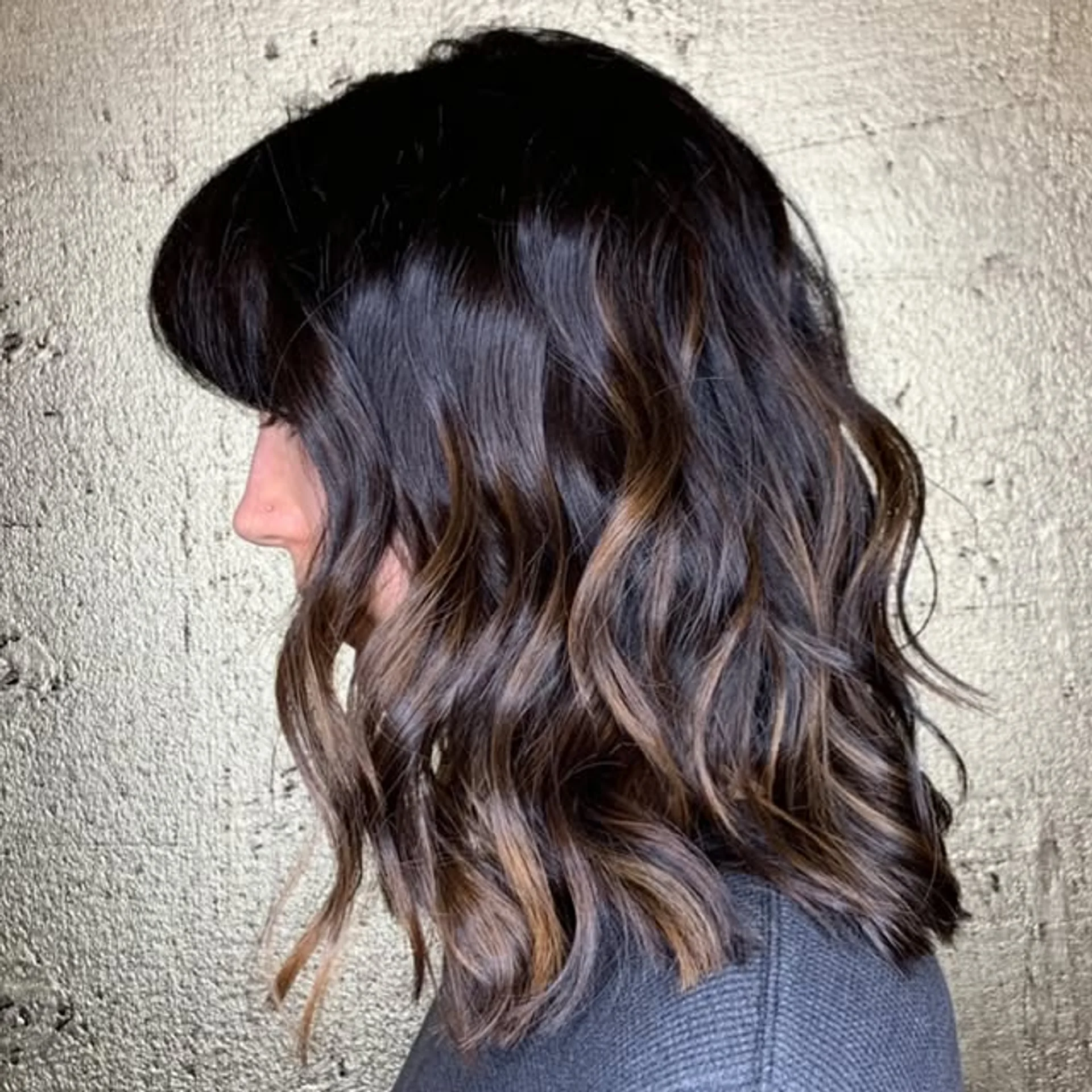
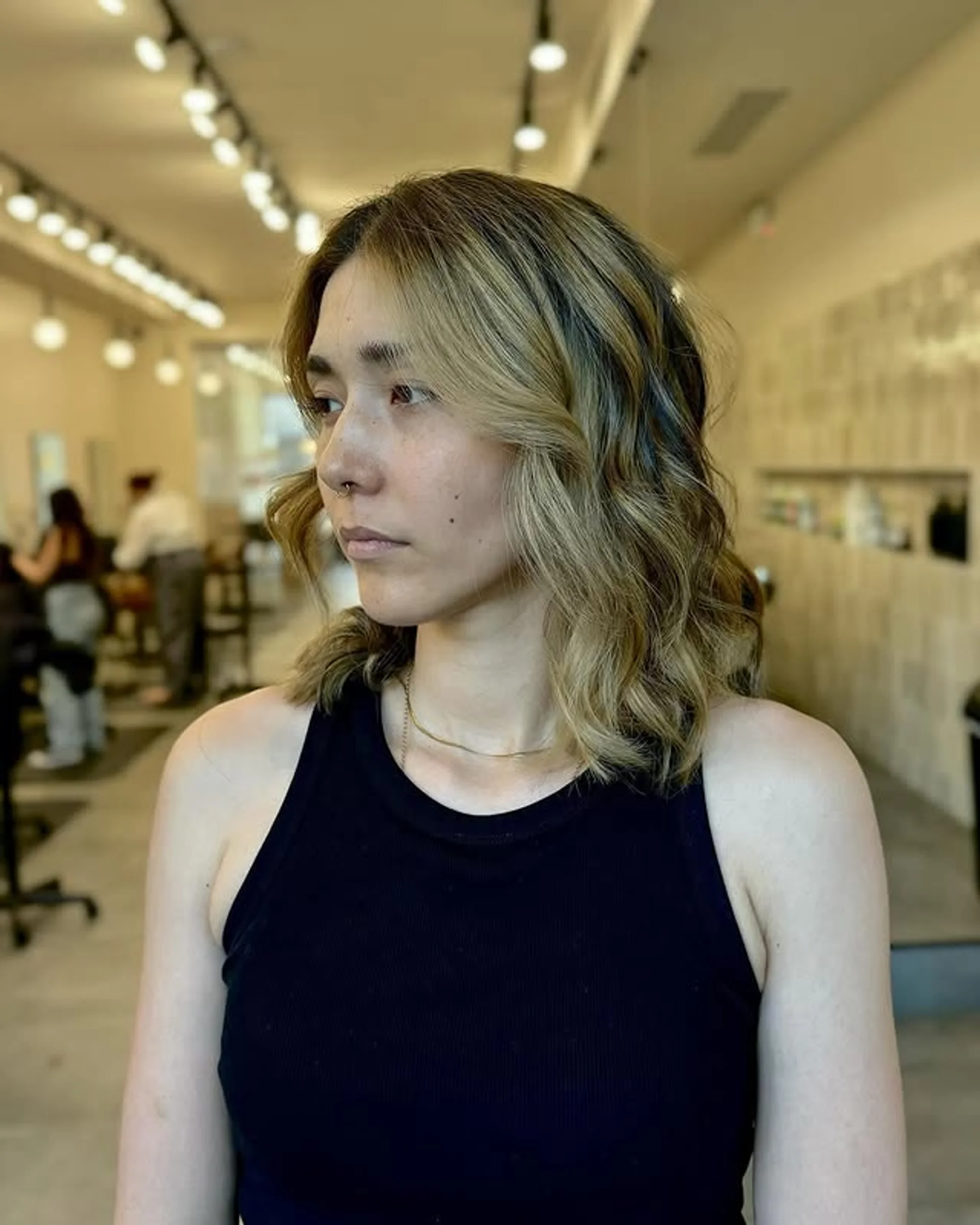
When deciding on a wavy lob, adding curtain bangs is an excellent way to introduce shape around the face without sacrificing the easy movement of a medium-length cut. However, the most critical decision is length. Cutting the fringe too short or too bluntly creates a disconnected block of hair that stands apart from your natural waves. Keeping the curtain bangs long enough so the outer corners blend directly into the side layers ensures a fluid, cohesive shape that moves naturally. The primary tradeoff is styling: while the lengths of a wavy lob can often air-dry, curtain bangs typically require intentional heat styling to sweep away from the eyes.
Classic Wavy Lobs With Curtain Bangs
A standard wavy lob paired with curtain bangs centers on creating a sweeping, center-parted fringe that angles downward. The shortest piece typically hits right around the cheekbone, while the longest outer corners cascade into the upper layers of the lob. This structure allows the bangs to sweep back and merge with the surrounding wave pattern. When requesting this look, discuss where the hair will sit naturally once the wave shrinks up.


Shaggy Cuts for Seamless Integration
If you want the most effortless blend possible, a shaggy lob provides the ideal foundation. Because a shag incorporates significant, varied layering throughout the crown and sides, the curtain bangs don't sit alone as a separate element. Instead, they act as the shortest pieces of a continuous layered slope. This cut heavily embraces natural wave patterns and texture, though the tradeoff is a reduction in weight and density at the ends of the hair.


Extra-Long Fringe and Face-Framing Layers
For those hesitant to commit to a true, eye-skimming fringe, opting for an elongated curtain shape—often categorized simply as face-framing layers—is a practical alternative. By keeping the shortest piece between the cheekbone and jawline, the hair easily tucks behind the ear or pulls back into a clip. While this offers less dramatic coverage across the forehead, it handles wave shrinkage predictably and guarantees the front sections will blend smoothly into the rest of the lob without feeling disconnected.


Compare portfolio photos and discuss your goals with a stylist.
Explore hairstyles


